Dog Training in
North Jersey
A dog in North Jersey can have a big yard and a quiet street and still pull on every walk and bark at whatever passes the fence. That is why understanding dog psychology and how to be the leader and parent figure for your dog comes first in everything we teach.
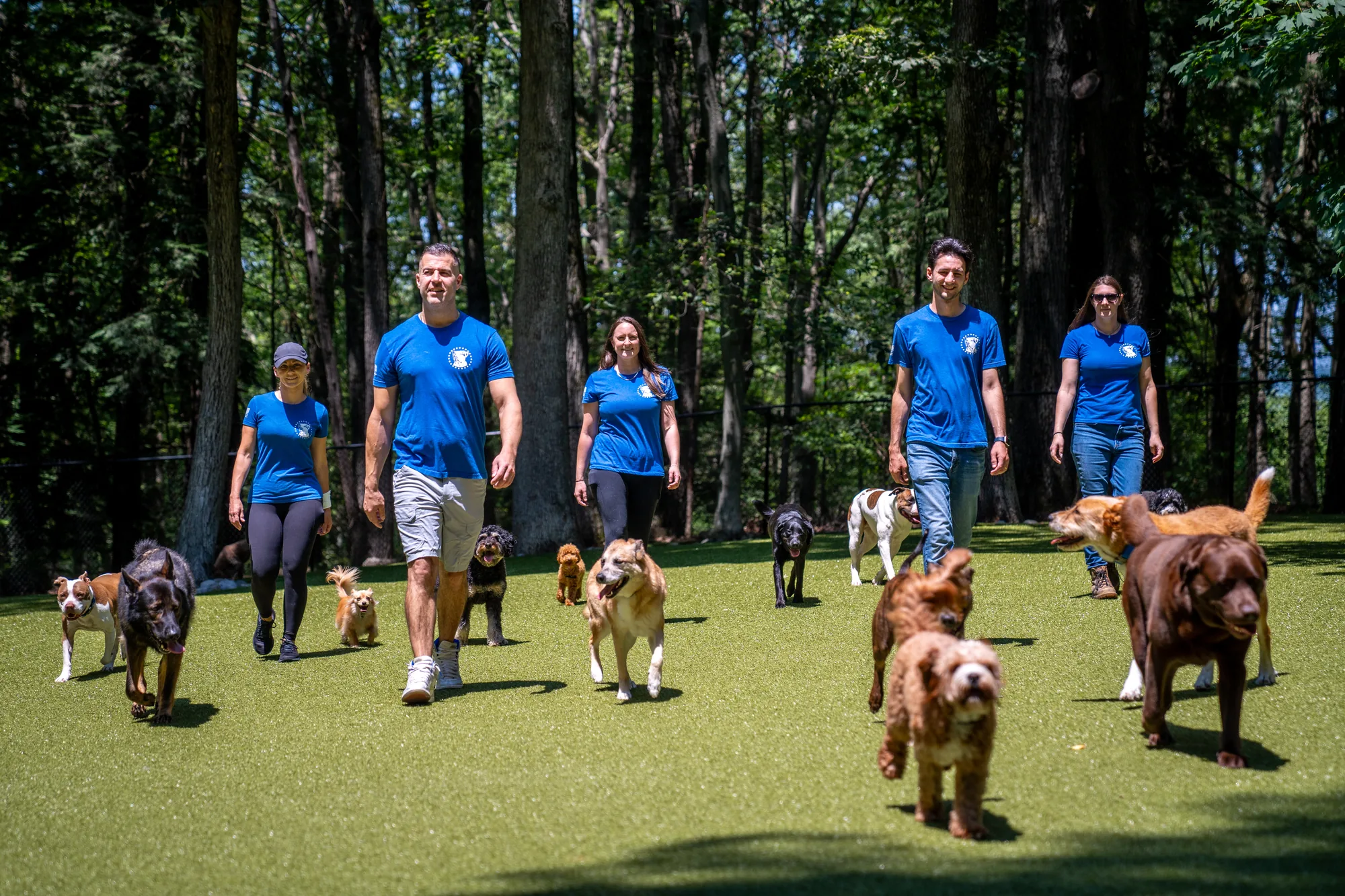
A North Jersey dog's day is often the back door, the yard, the fence line, the front window and a walk around the block, and every one of those can be a place where the dog starts making the decisions.
A dog who does not view their human as a leader, based on dog psychology, will have no one to rely on and guide them, often creating pulling on the leash, barking at the door, charging the fence, jumping on guests or running off the moment the gate is open. Owners tell us they've tried other trainers, veterinarians, behaviorists but still don't see results. What's often missing is an understanding of dog psychology and exactly how to develop a relationship where the human leads as a calm and confident parent figure and the dog happily follows.
This is the work we do with North Jersey families, on eight private acres within about an hour of most of Bergen, Morris and Essex counties.
The towns we work with.
We serve the northern counties from a ranch with a lodge of more than 5,000 square feet and a team on site day and night. It is within about an hour of Ridgewood, Franklin Lakes, Wyckoff and Tenafly in Bergen; Montclair, Livingston and Short Hills in Essex; and Morristown, Montville and Mountain Lakes in Morris.
If your town is not listed, we very likely still serve it. For most of the three counties a weekly session during a Residency, or a Private Session, is a morning out.
Four kinds of North Jersey dog.
Without a leader, a dog takes their habits from where they live. Three of these come from the address and the fourth from the family's week.
The walking-town dog
Sidewalks, neighborhood streets, the coffee shop, a county path. On the walk, dogs pass each other head-on, on leash and sometimes up close, with little space and a lot of distractions. The dog who cannot make space makes noise.
The big-lot dog
A big yard and a fence line. The land gives a dog a border to patrol and a property to guard, and the walks get fewer because of how the dog behaves once they leave it.
The quiet-street dog
Same route, same park, same four dogs. They behave well inside that routine and are not ready for the baby, the contractor or the week away.
The weekend dog
Not enough structured exercise all week due to the work schedule, then a lot on the weekend: the dog park, the back yard or a trail, usually without much structure. Five days of too little and one day to try and make up for it.
Whichever one lives at your house, the list families bring us is short:
- Barking or lunging at other dogs on the walk
- Pulling on the leash
- Barking at the door or the front window
- Charging the fence when a dog or a delivery truck goes by
- Getting tense or nervous walking by different people
- Trouble with guests coming over
- Integrating a new baby with the dog
What we do about it.
The Pack Leader Residency
Four to eight weeks living at the ranch. State of mind first, obedience second, with weekly sessions for you during the stay, a go-home session, a two-week follow-up and support for the life of your dog.
Explore Prevention, not interventionThe Puppy Residency
Two to four weeks between twelve and twenty weeks old. Leash, crate, housebreaking, place, and calm around other dogs and people, set before the yard or the routine can teach something else.
Explore One on onePrivate Sessions
An initial ninety-minute session at the ranch with Steve or Dave, on its own or followed by two sixty-minute sessions, for puppies, adolescents or adults. For families who want the work in their own hands.
Explore Anywhere in the worldVirtual Sessions
Forty-five minutes with Steve, one on one, from your kitchen. Most of the work is for the human, and a camera carries that faithfully.
ExploreThe walk starts at the front door.
Most North Jersey families come to us about the walk, or about what happens at the front door when someone comes over, and most are surprised that we start inside the house.
The walk is where the relationship is either established or lost, and it is decided before you reach the street. A dog who doesn't listen inside the house, rushes out the door first, drags you down the driveway, has already decided who is leading, and no amount of correcting or treats on the street undoes a decision made at the door or inside the house.
This is where our approach is different, and it is why the results hold once the leash is back in your hand. We start with the principles of dog psychology, so you understand how a dog sees the world. Then your own dog: why they are behaving the way they are, in your house and on your street. Then the relationship, and what has to change in it so that you can give your dog leadership. And last, the exact tools and techniques that suit you, your dog and the relationship between you.
Where North Jersey dogs go.
For families who want to practice between sessions, these are the places worth knowing. One rule covers the dog parks: an off-leash park is a test, and a test is for a dog that is ready.
One practical note. New Jersey licenses dogs town by town: every dog seven months or older needs a license from the town where they live, for one year or three depending on the town, with proof of rabies vaccination. State parks and Bergen County parks require a leash of six feet or less outside their dog runs, and so does Pyramid Mountain. In Essex County parks a dog is on leash everywhere outside the dog parks.
“If you witnessed how it was previously, this is the closest thing to a miracle I’ve ever experienced… For this reason, I have not and will not train my dogs anywhere else.”
Ronni WeinerWyckoff · Google review
It started on the sidewalks of Hoboken.
What we teach is not just a theory. It was developed from experience: first walking large packs of dogs through Hoboken every day for years, then helping thousands of dog owners achieve balance with their dogs for more than fifteen years.
The method puts psychology ahead of obedience: a dog that sits on command and charges the fence when a car slows has not been trained, they have been drilled. We work on the state of mind that holds up when nobody is asking.
The real thing.
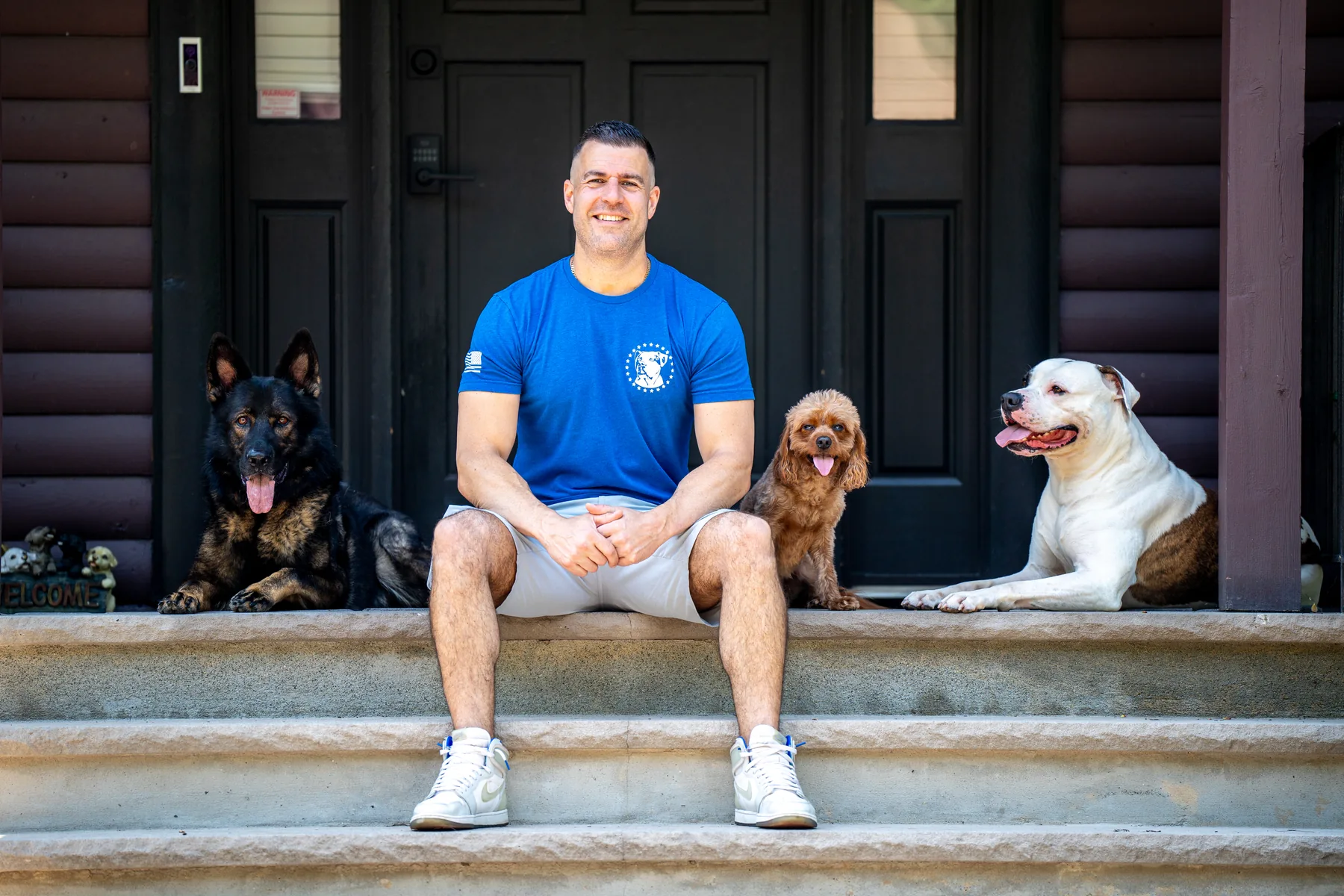
For more than fifteen years, Steve Del Savio has helped thousands of people in the New York City metropolitan area, from everyday families to celebrities. He is also an educator on social media, with more than two million followers across Instagram, Facebook, TikTok and YouTube. His approach is unique: he uses dog psychology to help owners understand their dogs and get to the root of the problem, for lasting results.
A pack you may recognize.
We are honored to have worked with so many remarkable dogs, and their owners too.
Bethenny Frankel
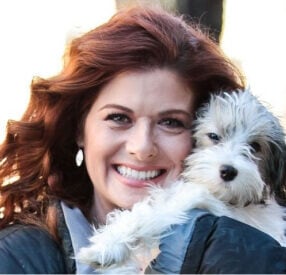
Debra Messing
Watch the film
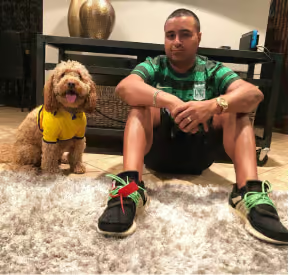
DJ Camilo
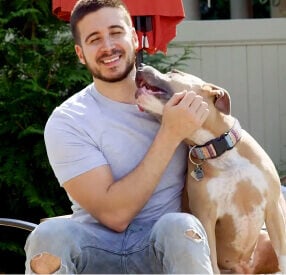
Vinny Guadagnino
Watch the film
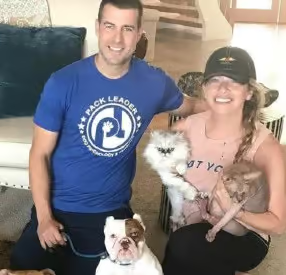
Dina Manzo
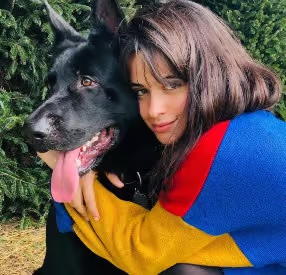
Camila Cabello
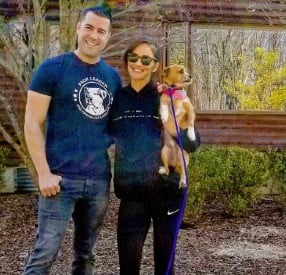
Minka Kelly
Dexter Lawrence
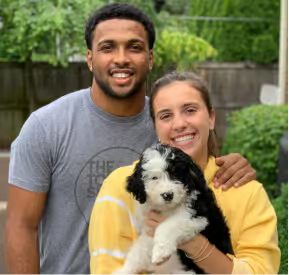
Julian Love
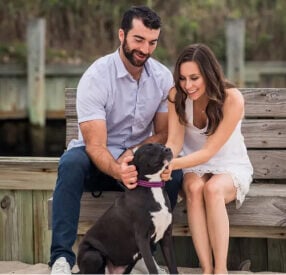
Kyle Palmieri
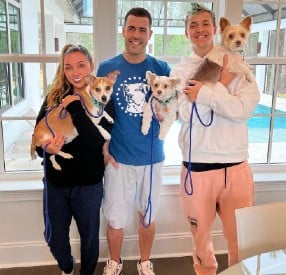
Ninja

Mariale
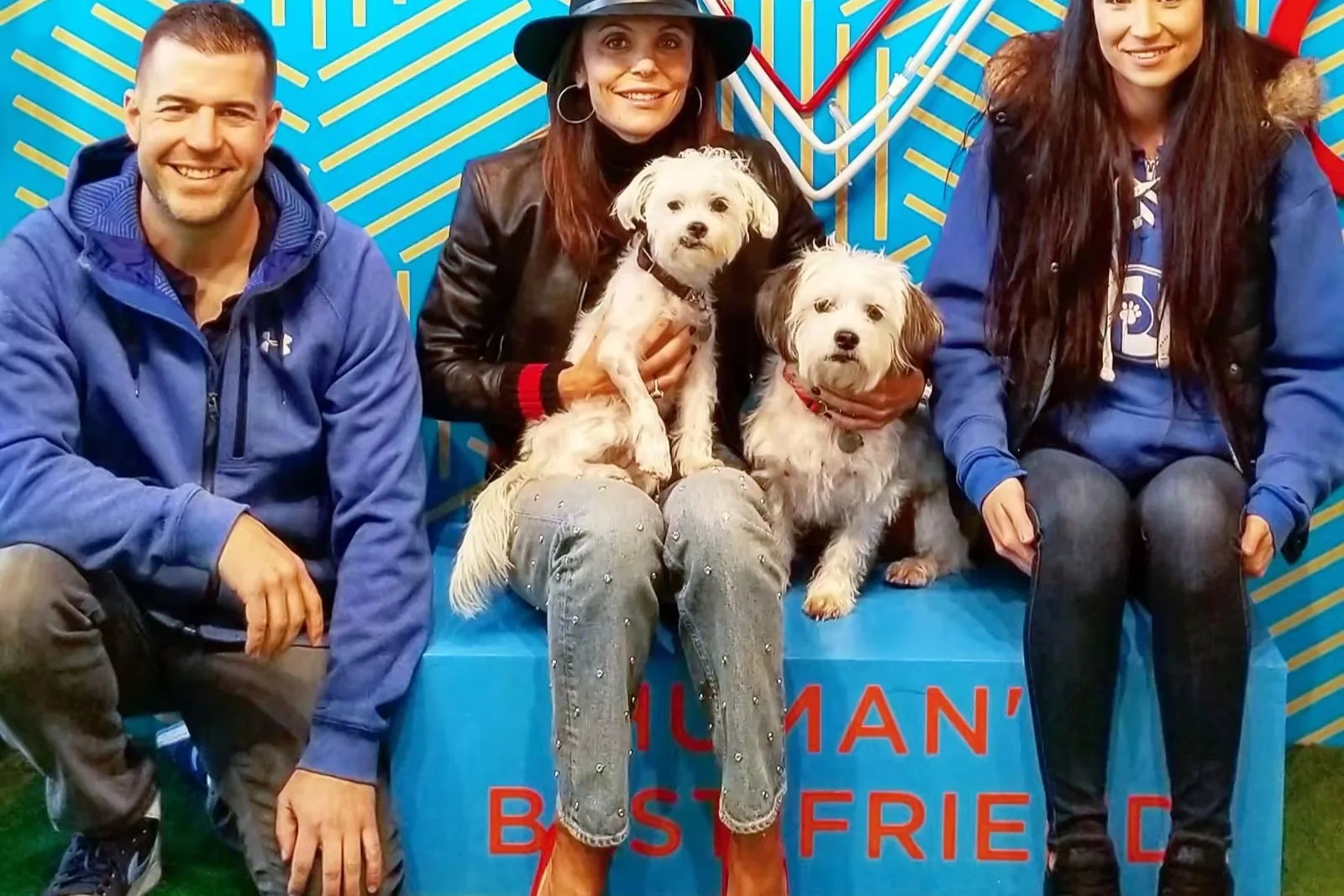
“Do not hesitate to reach out if you need help with your dogs… I seriously don’t know what I would’ve done without Steve’s intervention. I highly recommend Pack Leader services because this team is truly excellent.”
Bethenny Frankel, Biggy & SmallzReal Housewives of NY
Questions families ask
Where is the ranch?
On eight private acres in Northern New Jersey, within about an hour of most of Bergen, Morris and Essex counties. We do not publish the address. It is shared with accepted families, and visits are by appointment. The Pack Leader Residency, The Puppy Residency and Private Sessions all take place there, and Virtual Sessions reach you at home.
We have a fenced yard. Why does our dog still need a walk?
Because a yard is a place a dog is let out, and a walk is something the two of you do together. In the yard a dog is on their own. The walk is where they learn to follow, and it is where the relationship gets set.
Do you come to our home?
All initial training is held at the ranch, whether you choose Private Sessions or a Residency, because there we have full control over the environment and can assess your dog away from the habits of home. Follow-ups at your home are available on a case-by-case basis for an additional travel fee. Virtual Sessions reach your home by camera.
Board and train, Private Sessions or Virtual Sessions: which is right for our dog?
In a Residency your dog lives at the ranch, four to eight weeks for The Pack Leader Residency and two to four for The Puppy Residency, and you learn to lead in weekly sessions and at the go-home session. Private Sessions bring you and your dog to the ranch for ninety minutes with Steve or Dave, and you carry the practice home. A Virtual Session is forty-five minutes with Steve by camera, from your own house. Which one fits depends on your dog and on how much of the daily work you want in your own hands. Tell us about your dog on the first call and we will tell you which one we would choose.
Do you train puppies?
Yes, and the best time to start is before the puppy comes home. A Virtual Session at that point helps you prepare the house and the first days, and can even help you select the right puppy. Once the puppy is home, a puppy training session at the ranch gets you started hands-on. The Puppy Residency, for puppies twelve to twenty weeks old, sets the leash, the crate, housebreaking and calm around other dogs and people over two to four weeks.
How long does board and train take?
The Pack Leader Residency runs four to eight weeks depending on the individual dog and goals. The Puppy Residency runs two to four weeks. We will propose how many weeks after we understand your individual situation and complete the in-person assessment.
What does it cost?
Begin with an application. We discuss the price range for a Residency on the first call, before any assessment fee or travel. Private Sessions are quoted on that call. Virtual Sessions are booked straight to Steve's calendar, and we are glad to talk it through first. A Residency is priced by the number of weeks. The in-person assessment determines fit and how many weeks your dog needs; if accepted, we agree the final quote before booking. The assessment is $295, credited toward any program you book within 30 days. A Residency covers the stay, the weekly owner sessions, the go-home session, the two-week follow-up and support for the life of your dog. Read the full breakdown
How do we start?
Begin an application for a Residency or Private Sessions. If you are not sure which program fits, say so on the form and we will help you choose. Virtual Sessions can be booked directly through Steve's calendar. You will hear from us within one business day.
Begin an application.
Residencies are limited each season. The application takes five minutes, and you will hear from us within one business day.
An application opens a conversation. Nothing is booked until we have spoken.
Prefer to talk first? 201 528 3647. Whoever answers will know the ranch, the programs and the calendar.