
Most dog owners have seen it. A dog finishes their business, then digs their back legs into the ground and sends grass and dirt flying behind them. Some owners laugh. Some get embarrassed. Most wonder what it means.
Look it up and the answers come fast, and they don't agree. The dog is covering it up, like a cat. It's dominance. It's pheromones from the paws. It's nothing at all. Ground scratching has become a polarizing topic in the dog world, and some of what gets repeated about it doesn't hold up.
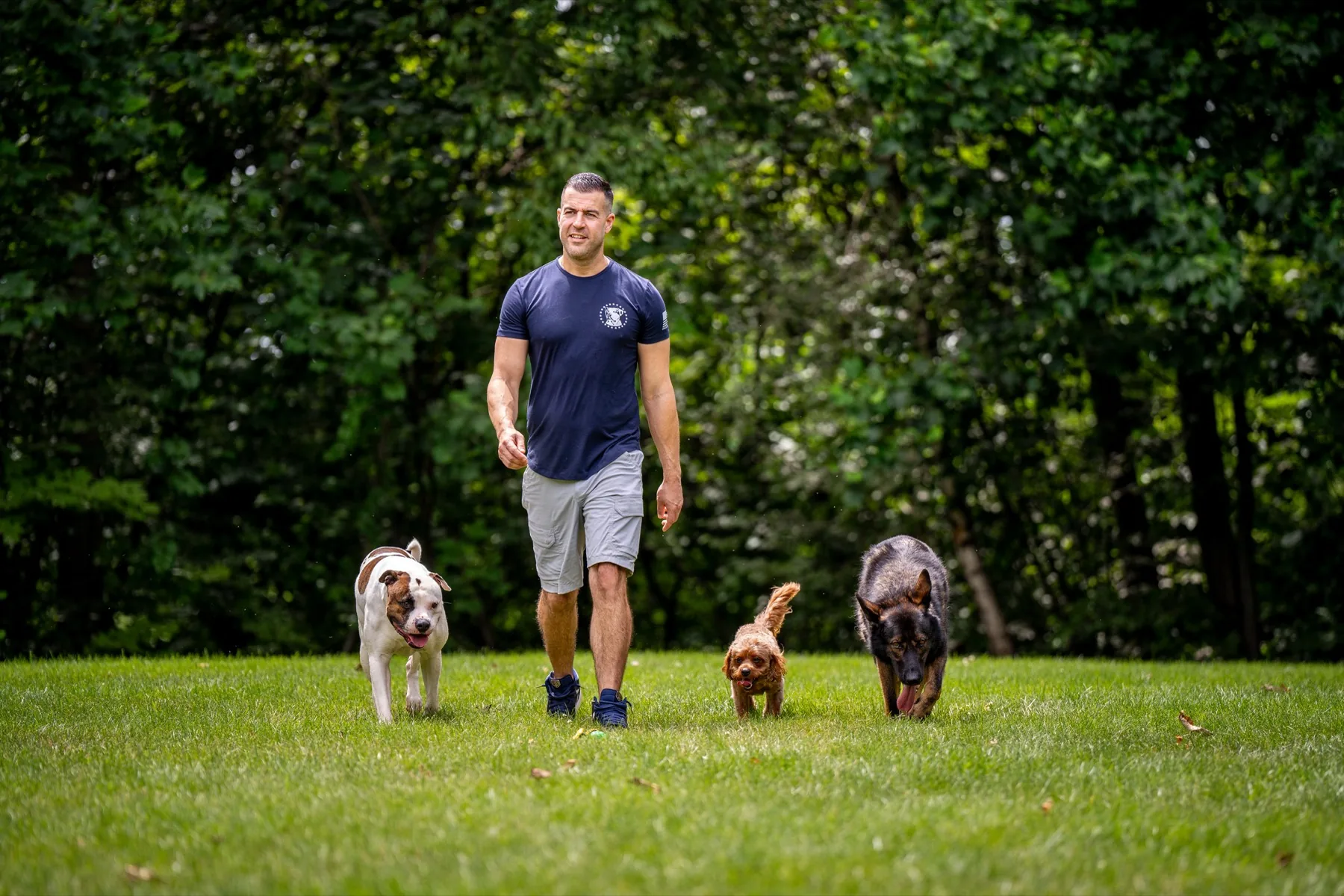
This article looks at what we understand about ground scratching and what we don't: what researchers have found in about fifty years of studying dogs and wolves, what people who live and work with dogs have seen, and how Steve Del Savio, founder of Pack Leader Dogs, reads the behavior through dog psychology.
Is it good or bad when a dog kicks after pooping?
For Steve, the kick itself matters less than how hard it gets. "The behavior is normal, and how intense it gets depends on the individual dog, the dog's relationship with their human, with other dogs and the environment," he says. "In my opinion, the behavior itself is instinctual, normal, and shouldn't be considered good or bad."
"Some individual dogs are more inclined to do it than others," he adds. "The intensity in which a dog does it seems to be related to how they feel based on their relationship with their human and other dogs based on my experience."
That idea runs through everything below. The behavior is normal. The intensity is what tells us something.
What does the science say?
Researchers have studied ground scratching for about fifty years, mostly in wolves and in dogs living free. The findings agree on what it looks like and when it happens. They're thin on what it means.
Between 1971 and 1976 the biologist Marc Bekoff followed 13 free-ranging male dogs, some on a university campus in St. Louis and some near Nederland, Colorado. They scratched after about 15 percent of their pees, and only on grass or dirt. Whether another dog was watching made a big difference. When another dog could see them, they scratched about one time in four; with no dog in sight, about one time in fifteen. They even scratched after lifting a leg when nothing came out.
Bekoff called ground scratching a "composite signal": scent plus something to see, carrying the news that a dog just marked farther and faster than the smell of urine alone. He also suggested it might work as an intimidation display, and noted that other dogs often kept their distance from a male dog during the scratch and just after. In his larger study of free-ranging dogs that year, females scratched too, a little less often than males.
The pee or poop carries the scent. The scrape adds a scuff in the ground that the next dog can see.
Whether the paws add scent of their own is a newer question. In 2020, researchers in Norway swabbed scent from a back paw of each of 96 dogs and offered it to 48 others. The males sniffed other males' paw scent longer than a plain ground sample, and the females sniffed other females' paw scent with the right nostril, which the researchers link to new or arousing smells. So dogs do recognize the scent of other dogs' paws. Whether a scrape leaves that scent on the ground for the next dog is still untested, and no study we found identifies a paw "pheromone."
A review of dog communication adds one more possibility, the sound of the scrape. That one hasn't been tested either.
Do wolves kick the ground too?
They do, and the wolf research tells the clearest story. In wild wolves, most of the scratching comes from the breeding pair, the parents who lead the family.
The wolf biologist L. David Mech watched one pack on Ellesmere Island, in the Canadian High Arctic, across 16 summers between 1986 and 2005. In seven of those summers he never saw the breeding pair scratch. In six more he saw it three times or fewer. Then came 1992. Outside wolves started coming around, and the pair scratched far more than in any year before: near a muskox they had killed, where an outsider had fed minutes earlier; near a garbage dump the outsiders used; and at the far eastern edge of where the pack traveled that summer. It was the only year Mech saw his wolves chase or attack outsiders. He described them as extra alert, looking around intently as they marked and scratched, in "a high state of arousal and aggressiveness."
His notes hold other telling moments. In 1996 the breeding female scratched while trying to drive a muskox away from the den. In another part of the Arctic, he watched wolves scratch at a red fox's den. Sometimes the wolves scratched without peeing or pooping at all. And the males and females scratched about equally.
In his 2025 book on the Ellesmere wolves, Mech tells that muskox scene in full from his notes of July 23, 1992. The breeding female, Whitey, and her mate had killed an old bull muskox, and other wolves were in the area. Instead of going straight to their kill, the pair spent 20 to 30 minutes circling it, checking the scent marks around it, marking, and above all scratching, intent and excited and looking around the whole time. Only then did they eat. Whitey scratched far more than her mate that summer. Looking back, Mech writes that the situations in which wolves scratch suggest it reflects a heightened level of aggressiveness, and that the wolves he watched scratching seemed "hyper alert or upset." What the scratching actually accomplishes, he adds, is still unknown.
In 2025, researchers in Poland tested the idea with trail cameras. They set out urine from unknown wolves and unknown dogs inside wolf territories. The breeding pairs marked over it and scratched the ground, mostly at the strange wolf urine; scratching was their longest response after sniffing. The young wolves mostly sniffed, and spent longer on the dog urine than the adults did.
Steve reads the wolves the same way. "From my research, it seems like they do, mostly after eliminating or marking and most from the pack leaders, the breeding pair," he says. "It makes total sense to me because territory is important to many animals, especially wolves. I see it as a way wolves try to sort out 'property lines' before actual physical conflict like fighting over territory."
Is ground scratching about dominance?
This is where the arguments online get loudest. Steve's answer sits close to the research, and close to Mech, whose book names the two jobs wolf marking still does in summer as social status and territory. In Steve's words: "In my opinion, it is first an instinct related to territory, and where dominance comes in is it seems like dogs who see themselves as higher ranking do it more often."
The closest study followed a pack of free-ranging dogs on the outskirts of Rome. Over 14 months in 2005 and 2006, researchers watched a pack of 27 dogs that lived on their own and were fed by volunteers, and logged 143 ground scratches in about 280 hours. The dogs scratched most along the edges of their territory, usually right after a raised-leg pee. They scratched more during conflicts than during other encounters, and most of all in conflicts with dogs from other packs. And the higher-ranking males scratched more often than the lower-ranking ones.
The researchers' conclusion lines up with both parts of Steve's answer. Ground scratching, they wrote, works as a means of territorial defense and as a display of social dominance: a visual mark that backs up the scent of the urine and intimidates opponents.
Two cautions keep that honest. In that pack, rank, age and aggressiveness went together. The higher-ranking dogs were also the older and more aggressive ones, so the study can't say which of the three drives the scratching. And those dogs lived free, mostly unsocialized to people. No study has tested how it plays out between a pet dog and their owner. That part rests on experience.
Which dogs do it?
Not every dog, and not every walk. The best numbers come from a 2020 study of 100 shelter dogs, each walked for 20 minutes by an unfamiliar man and an unfamiliar woman. Ground scratching showed up on fewer than 4 walks in 10, and only a minority of the dogs did it at all. Females scratched too, on about a quarter of walks. Whether a man or a woman held the leash changed how often the dogs peed and pooped, but it made no difference to the scratching. The researchers' guess: dogs who scratch may simply be more confident.
Two earlier studies from the same researcher, Betty McGuire at Cornell, fill in the picture. In 2016 she followed 500 shelter dogs on single walks. The young dogs almost never scratched. Among adults and seniors, 20 to 50 percent did, and most groups were under 30 percent. Males scratched a little more often than females, though not by enough to count as a real difference. And the dogs who scratched were the heavy markers: they aimed about twice as many of their pees at spots they had just sniffed. In 2019, studying more than 600 shelter dogs, she found that neutering made no difference to scratching in males or females, even though it cut how often males marked with urine. In the free-ranging pack, too, the older, higher-ranking dogs scratched more than the young ones.
Steve's experience lines up. It's "the minority of dogs," in his words. The dogs who do it with the most intensity, he says, are usually excited dogs and/or dogs who believe they are higher ranking, even though they may not be. Adult dogs do it more than puppies. Males do it a little more than females: "I've witnessed many female dogs ground scratch but have noticed males doing it a bit more."
Neutering, in his experience, changes marking more than scratching. "I haven't noticed it reducing the ground scratching as much. I have noticed it reduce marking behavior."
Why does a dog suddenly start scratching?
When a dog who never scratched suddenly starts, Steve looks for a change in their world: "a new dog in the home, a new dog in the neighborhood or close vicinity or a change in environment." It echoes Mech's 1992 summer, when outsiders showed up and the scratching took off.
With his clients, the pattern is familiar. "It almost always starts as marking and progresses into ground scratching. The dogs who scratched the ground with the highest intensity were often missing leadership in the home."
That's the hopeful part, because leadership in the home is something an owner can build.
What's going on inside the dog?
Steve starts with the dog's state of mind. "To me they seem excited, aroused, and can even be confrontational at times." On the excitement scale Steve teaches, from 0 (calm) to past 10 (the red zone), a dog tearing up the grass sits "almost always in the 5-10 range": higher excitement, but short of the red zone. That state of mind is close to what Mech saw in his scratching wolves.
"At the basic level, it's a scent and visual marking behavior," he says. "I suspect it's also related to the territorial instinct."
Before the kick, the dog is usually reading other dogs. "Seems like they are smelling fresh waste or scent of other dogs. They seem to do it more when they see other dogs." The shelter research caught the same thing: a few adult males scratched without peeing or pooping at all, right after sniffing a spot on the ground, and one right after seeing another dog. Sound seems to matter less to Steve: "I haven't noticed much about sound besides hearing other dogs in the area may trigger it."
And the next dog to pass the spot takes in the message through their strongest sense. "I'd say they receive information through their nose, their strongest sense, that another dog or animal is near or has been there."
Why do some dogs tear up the ground?
A couple of quick scrapes and a dog tearing up the grass are different things. The difference, Steve says, comes down to "a few factors such as the dog's individual energy, their relationship with their humans and other dogs, and whether or not they have been allowed to practice the behavior or not."
The relationship is the one he sees turning the intensity up. "When it's present, it's usually more intense when the dog is leading than if they were following the human. It's often also because humans in the follower position allow it at high intensity along with many other behaviors." The owner's part, as he puts it, is "mostly the level at which they tolerate the ground scratching, if the dog does present that behavior."
City or country makes little difference in his experience. "Seems to be more related to the individual dog, their relationship with human, relationship with dogs and how many other dogs in the environment, especially others who are marking or scratching."
And when the relationship changes, the scratching follows. "With the dogs who do it, we have noticed the ground scratching does dramatically reduce in intensity when the relationship with their human is repaired and the dog's state of mind switches into a follower state."
Darla's story
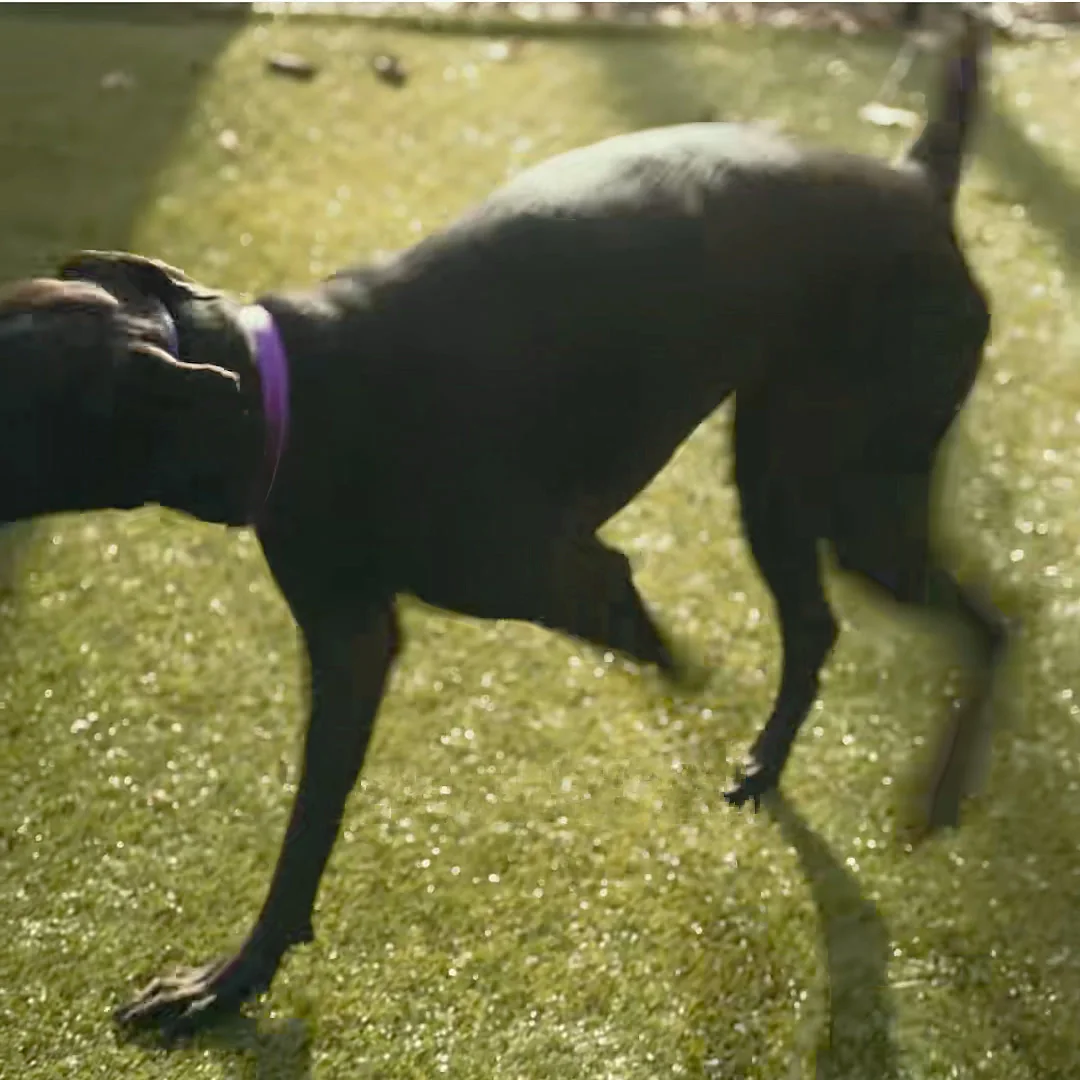
Darla is the dog Steve points to. Darla came to Pack Leader Dogs from New York City with problems around people and dogs. "The biggest issue I saw was that Darla was leading the relationship with her owner. Darla was protecting and directing her owner and was anxious and insecure about it," Steve says. "When she first came and we were observing her, she was incredibly intense about the ground scratching."
He watched before doing anything. "At first I observed to see the intensity, duration, what she did after it. When I noticed it was very intense, often when other dogs became present, I discouraged the intensity. I still allowed her to do it but I put a limit on the intensity."
The real work went to the relationship. "As we continued to establish leadership with her, built her confidence, and helped her relationship with other dogs, the ground scratching reduced dramatically."
Are dogs trying to bury it, like a cat?
No. Researchers describe the scrape as adding to the mark, and Steve sees it the same way. "In my experience, I do not see it as they are trying to cover it. If anything they are adding visual and scent to their waste."
Because the scrape covers nothing, the poop stays right where it landed. The kick usually doesn't even touch it: Bekoff noted that dogs and wolves rarely hit their own deposit when they scratch. Picking up after a dog matters as much as ever.
Do dogs do it more after peeing or pooping?
People search for it after pooping. Bekoff's dogs did it after peeing. In the free-ranging pack near Rome, the dogs scratched mostly right after a raised-leg pee, and the researchers concluded that poop played only a small part in how those dogs marked. Shelter dogs on leash walks look different. In the 2016 study of 500 shelter dogs, adults scratched after pooping about as often as after peeing, seniors more often after pooping, and a dog who scratched after one was more likely to scratch after the other. Mech's wolves did it after both, and sometimes without going at all. Steve hasn't noticed a pattern either way. "It depends on the individual dog in my experience. I haven't noticed more ground scratching for peeing or pooping, generally speaking."
What should owners do?
- Watch first. Notice how intense it is, how long it lasts, and what the dog does right after, the way Steve did with Darla.
- Let normal scratching be. "I never stop them from ground scratching," Steve says. Whether to let a particular dog finish depends on the dog: "I think it really depends on the relationship, whether or not the dog is unstable or not, and the intensity in which they are doing it."
- Limit high intensity and long duration. "I discourage high intensity or long duration ground scratching, especially if it is related to other behavior issues or relationship issues." With an unstable dog like Darla, "we discourage the high levels of intensity while still allowing the behavior." In the moment, when a new dog appeared and Darla went into an intense scratch, "I would discourage that intensity and send her back to calm follower state in that moment."
- Work on the cause. "You don't just work on the ground scratching," he says. "You work on what is triggering the intensity and frequency which is oftentimes the relationship with their human in my experience."
His own dogs show where that leads. "My dogs do ground scratch at times, but it's never overly intense because we have a relationship where they see me as their leader and parent figure. It's never because they see another dog they are trying to intimidate."
When to get help, and when to see a vet
Steve's line for getting help is when the scratching comes with something more. "I would say if it's related to other issues like reactivity, aggression, anxiety, fear, excitement." In his experience, those cases often trace back to the relationship, which is where the work starts.
On health, "I'm not a vet but I have not noticed any medical conditions related to ground scratching," he says. Still, a dog who scrapes their pads raw on hard ground, or limps afterward, should see a vet.
What we still don't know
For all of that, the central question is open. Researchers still can't say what the message means. In a 2023 interview with Steve, Mech put it simply: "we sure don't really understand that very well."
Why some dogs never do it is open too. "Tough to say," Steve says. "I think it depends on multiple factors like the energy the dog is born with, how they are socialized with other dogs, the environment, and whether the human takes the lead in the relationship."
And the research hasn't looked at a dog's relationship with their owner at all.
The bottom line
After about fifty years of study, the research agrees on the shape of ground scratching. It adds to a mark. It rises around other dogs and strangers. The top dogs and the breeding wolves do more of it, females do it too, and neutering doesn't switch it off. What the message means, and why some dogs never send it, is still open.
The research hasn't touched the relationship between a dog and their owner, and that's where Steve's experience fills in. The scratching itself is instinctual and normal. The intensity is the part worth watching, and in his experience it follows the individual dog, the people leading them, the other dogs around them and the world they live in. When a dog sees their human as the leader and parent figure, the scratching tends to settle: a few quick scrapes, and on with the walk.
Sources
Bekoff, M. (1979). Ground scratching by male domestic dogs: a composite signal. Journal of Mammalogy 60(4), 847-848. doi.org/10.2307/1380206. Bekoff, M. (1979). Scent-marking by free-ranging domestic dogs: olfactory and visual components. Biology of Behaviour 4, 123-139. Bekoff, M. (2019). Ground-scratching dogs: scent, sight, and ecstasy. Psychology Today.
McClanahan, K., Rosell, F. (2020). Conspecific recognition of pedal scent in domestic dogs. Scientific Reports 10, 17837. doi.org/10.1038/s41598-020-74784-5
Siniscalchi, M., d'Ingeo, S., Minunno, M., Quaranta, A. (2018). Communication in dogs. Animals 8(8), 131. doi.org/10.3390/ani8080131
Mech, L. D., Anderson, M., Cluff, H. D. (2025). The Ellesmere Wolves: Behavior and Ecology in the High Arctic. University of Chicago Press, chapter 21. Mech, L. D. (2006). Urine-marking and ground-scratching by free-ranging Arctic wolves in summer. Canadian Field-Naturalist 120(4), 466-470. doi.org/10.22621/cfn.v120i4.356. Peters, R., Mech, L. D. (1975). Scent-marking in wolves. American Scientist 63, 628-637.
Stępniak, K. M., et al. (2025). Domestic dog scent marks trigger a behavioural response in wild wolves. Ecology and Evolution 15(7), e71364. doi.org/10.1002/ece3.71364
Cafazzo, S., Natoli, E., Valsecchi, P. (2012). Scent-marking behaviour in a pack of free-ranging domestic dogs. Ethology 118(10), 955-966. doi.org/10.1111/j.1439-0310.2012.02088.x
McGuire, B., et al. (2020). Sex of walker influences scent-marking behavior of shelter dogs. Animals 10(4), 632. doi.org/10.3390/ani10040632. McGuire, B. (2016). Scent marking in shelter dogs: effects of sex and age. Applied Animal Behaviour Science 182, 15-22. doi.org/10.1016/j.applanim.2016.06.001. McGuire, B. (2019). Effects of gonadectomy on scent-marking behavior of shelter dogs. Journal of Veterinary Behavior 30, 16-24. doi.org/10.1016/j.jveb.2018.11.002
Steve Del Savio's 2023 interview with Dr. L. David Mech, Ask The Pack Leader Show: youtube.com/watch?v=KMomcfChvR4
The ideas here are behind every program at the ranch. Explore the method