Aggressive dog
training.
Aggression is the outcome of a problem. Many of the dogs people call aggressive are insecure dogs reacting out of fear and lack of leadership. Whether it's a dog barking or lunging on the leash, or a frightened dog who barks at guests, those are the dogs we want to hear from. A few are the real thing, and we will tell you honestly which yours is on the first call. Either way, we always start with dog psychology, teach you how to be the leader and parent figure for your dog, and give you the tools and plan for success.
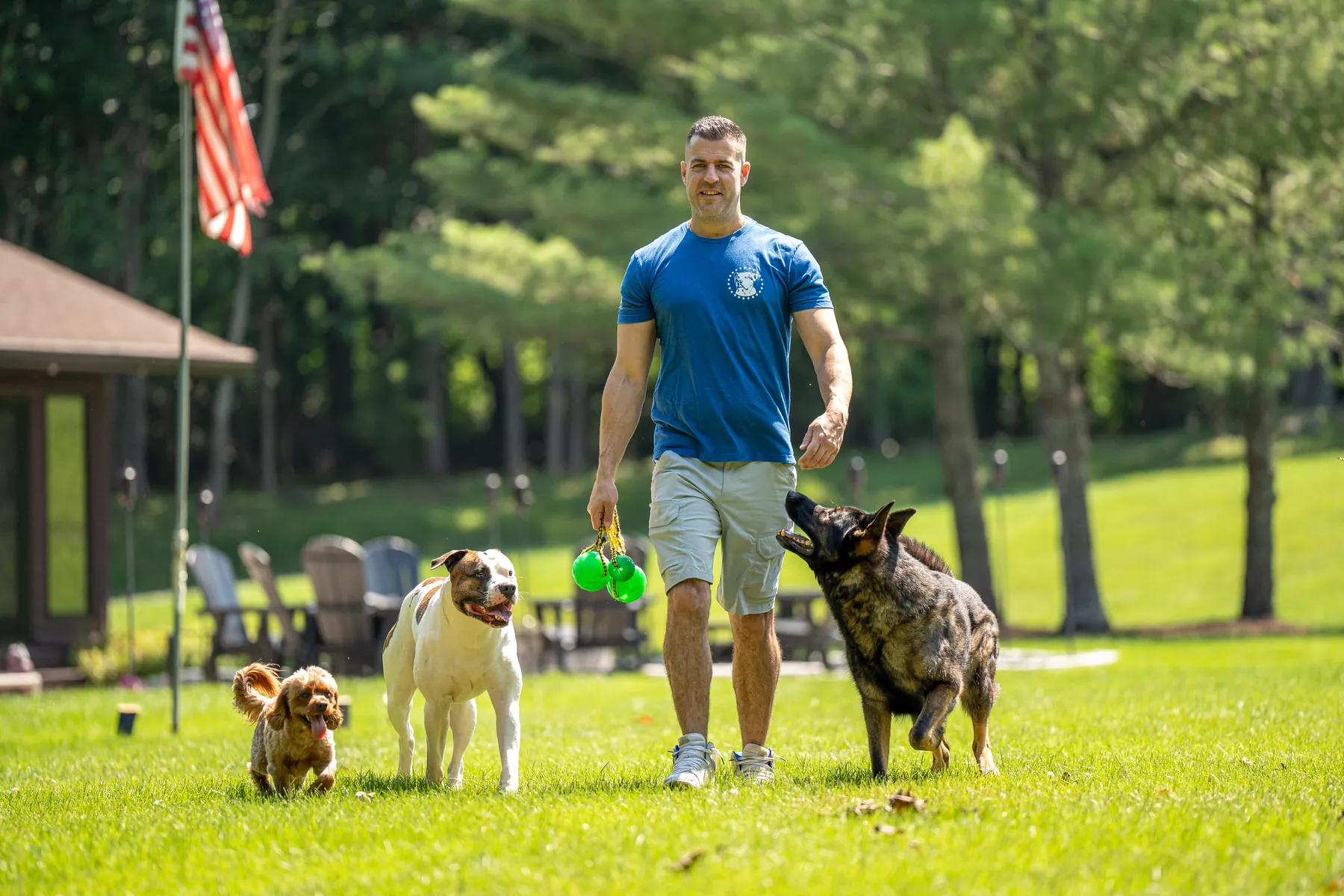
Almost everyone who reaches out to us about an aggressive dog has been through two or three trainers already. They have done the obedience, the immediate e-collar or prong collar treatment, the treats, the "look at me", sometimes the medication, and they are still living with a dog they cannot walk past another dog or cannot have guests around. Their effort was never the problem.
Aggression is the outcome. What is creating it though? Fear, anxiety, frustration, protection, arousal, the relationship: we do not know until we understand the dog. Most often, what dog psychology finds under the label is an insecure dog who has stepped into a leadership void because no one else filled it. With no calm leader to rely on, the dog makes the decisions, and the decision an unstable dog makes when another dog or a stranger comes close is almost always fight or flight. The growl, the lunge and the running away are the outcome. The relationship is the problem, and the relationship is the part that can change.
We are only taking select aggression cases at this time and we will let you know if we can help you on the first call. The dogs below are the ones we want to hear from.
What people call aggressive, and what it usually is.
In Steve's words, from a lesson in his community: “Aggression isn't a diagnosis. It's a behavior. What's creating the aggression? Is it fear? Anxiety? Confusion? Protection? Arousal? Frustration? The relationship? We don't know until we understand the dog.”
The dog who reacts on the leash
Lunging, barking or snapping at other dogs or people on the sidewalk, sometimes even from a dog who is ok off leash. Almost always it's from an insecure dog without a leader at the other end of the leash, making big explosions to keep away the things that make them insecure and even protecting one of their resources, you.
The dog who has issues with guests
Barking at the door when company comes, hiding behind the couch, or the nip when a guest walks over and reaches for them. Most often a frightened or insecure dog with no leader to handle the visitor for them, and no way out of the room. One of the most fixable things we see.
The dog who has taken the door
Barking and charging at the door, guarding the house and the people in it from everyone who comes near. A dog doing a job no one asked them to do, because no one else took it.
The dog who guards
The bowl, the bone, the couch, a person. A dog in charge protects what is theirs. We work on the relationship first and the bowl second, and the guarding usually goes with the first.
The dog who growls at family members
A dog who has taken the leader position over one person in the house and guards that person from the rest. Growling at the husband while leading the wife is one of the most common things we see. The dog is protecting a resource, and the resource is a human; the fix is the relationship with the whole family.
The dogs who feed off each other
Two or more dogs in the same home who wind each other up: going crazy at the front door, losing it with guests, not listening to anyone, unruly all day. Each dog is following the other, because no one in the house is leading either of them. Leadership for all of them settles all of them.
Where we draw the line.
True aggression is a different thing, and we will not pretend otherwise. A dog with severe aggression toward people, severe aggression toward other dogs, or a major bite history, the dog who bites and follows through, is a case we do not take for in-person training at this time.
If that is your dog, we will say so on the first call, plainly. We can still help through a Virtual Session, one on one with Steve, and we will point you toward any other help that fits. If, like most of the dogs we meet, yours is an insecure dog wearing the label, we will say that too, and tell you what we think the problem under it is.
Either way, the application and the first call cost nothing, and the honest answer is worth the five minutes.
What we do about it.
For the dogs we take, the usual fit is The Pack Leader Residency: the dog needs a new state of mind practiced every day, around other dogs and people, under calm leadership, and the family needs to learn the handling that keeps it. The assessment is where we say which program fits yours.
The Pack Leader Residency
Four to eight weeks living at the ranch, in a real home with a structured pack. State of mind first, obedience second, with weekly sessions for you during the stay, a go-home session, a two-week follow-up and support for the life of your dog.
Explore One on onePrivate Sessions
Ninety minutes at the ranch with Steve or Dave, on its own or as a series of three. For milder cases, for a first look at a dog, and for families who want the work in their own hands.
Explore Prevention, not interventionThe Puppy Residency
Two to four weeks between twelve and twenty weeks old. Most of what gets called aggression later began as a puppy who was never shown limits or calmly introduced to the world; this sets both before the habits do.
ExploreHow a stay works for a dog called aggressive.
It begins with the application and a call, where we want the whole history, any bite included, and where we say honestly whether your dog is one we take. Then the assessment at the ranch: thirty minutes with Dave, watching you and your dog, reading the energy on both ends of the leash, and deciding together whether the Residency is the right fit and how long a stay your dog needs.
The first days of the stay are for the relationship and for assessing: the dog's energy, their habits, the state of mind under the behavior. Then the work. We teach the dog exactly what to do and change how they feel, building confidence and earning their trust and respect. Most of our time with a dog is spent rewarding calm, respectful behavior. The rest is clear, well-timed guidance, given without anger and without drama, so the dog learns that reacting with fight or flight is not necessary when they feel unsure, that they have a leader and parent figure to rely on and that calm is what brings good things. We slow the mind down: wait at the door, wait for the bowl, walk calmly beside other dogs on the leash, starting and ending play calmly, all at each dog's individual pace.
The dog is going home to the same house, so the relationship has to come home changed too. That is why you train with us every week of the stay, take the leash back at the go-home session, and come back for the two-week follow-up. Photos and videos of your dog arrive every day. The Residency is kept to four to six dogs at a time, and a full team of trained dog professionals is on site twenty-four hours a day.
It is often a relationship problem, not a breed problem.
We keep no list of aggressive breeds. For much of our history people have blamed the dogs and blamed whole breeds; we believe the responsibility is ours, and that the dog labeled aggressive is usually a dog who has been asking for help with no one able to listen.
Families ask, reasonably, whether the work is guaranteed. The honest answer is that success with a dog rests on commitment, consistency, follow-through and patience, so we will not promise a percentage. What we can say is that we have yet to meet a dog who could not change for the better, and that many of the dogs who come to the ranch arrived after being told they should be managed around, medicated, or given up on.
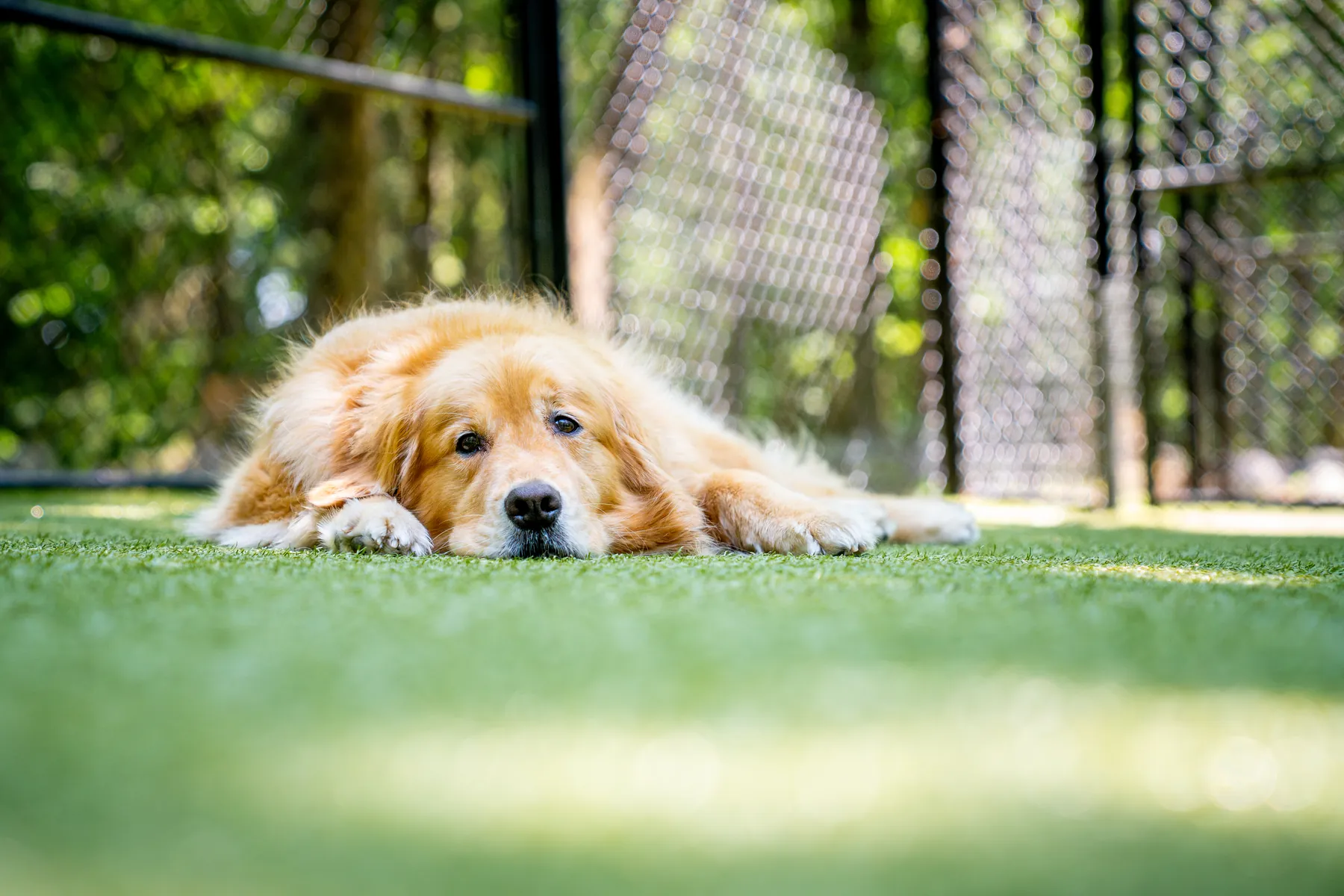
“I took him to 5 different trainers over a 2 year period and no one was able to help him, some even made him worse with the ‘fighting fire with fire method’… I finally came across pack leader dogs as a last resort and thank God I did.”
“Within minutes of meeting Steve, he was able to tell me that Hurley wasn’t an aggressive dog, just insecure and anxious… Hurley stayed with the pack for 6 weeks and the results were amazing.”
Tyler & HurleyGrowling and lunging at the family; five trainers called him aggressive
The last stop, for many.
What we teach is not just a theory. It was developed from experience: first walking large packs of dogs through Hoboken every day for years, then helping thousands of dog owners achieve balance with their dogs for more than fifteen years, including some of the most severe cases.
The method puts psychology ahead of obedience: a dog that sits on command and lunges at a stranger has not been trained, they have been drilled. We work on the state of mind that holds up when nobody is asking, and on the relationship that keeps it.
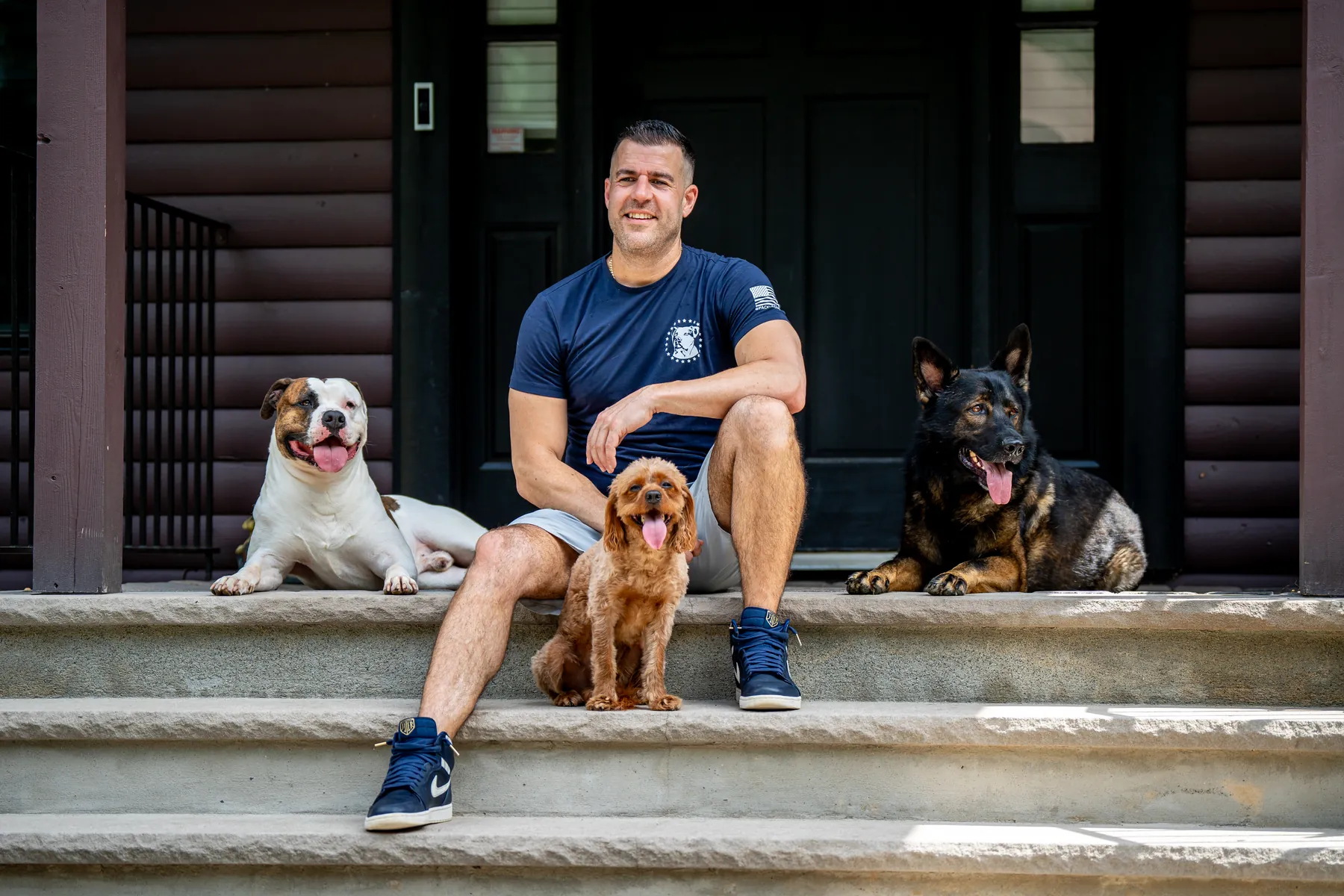
The real thing.
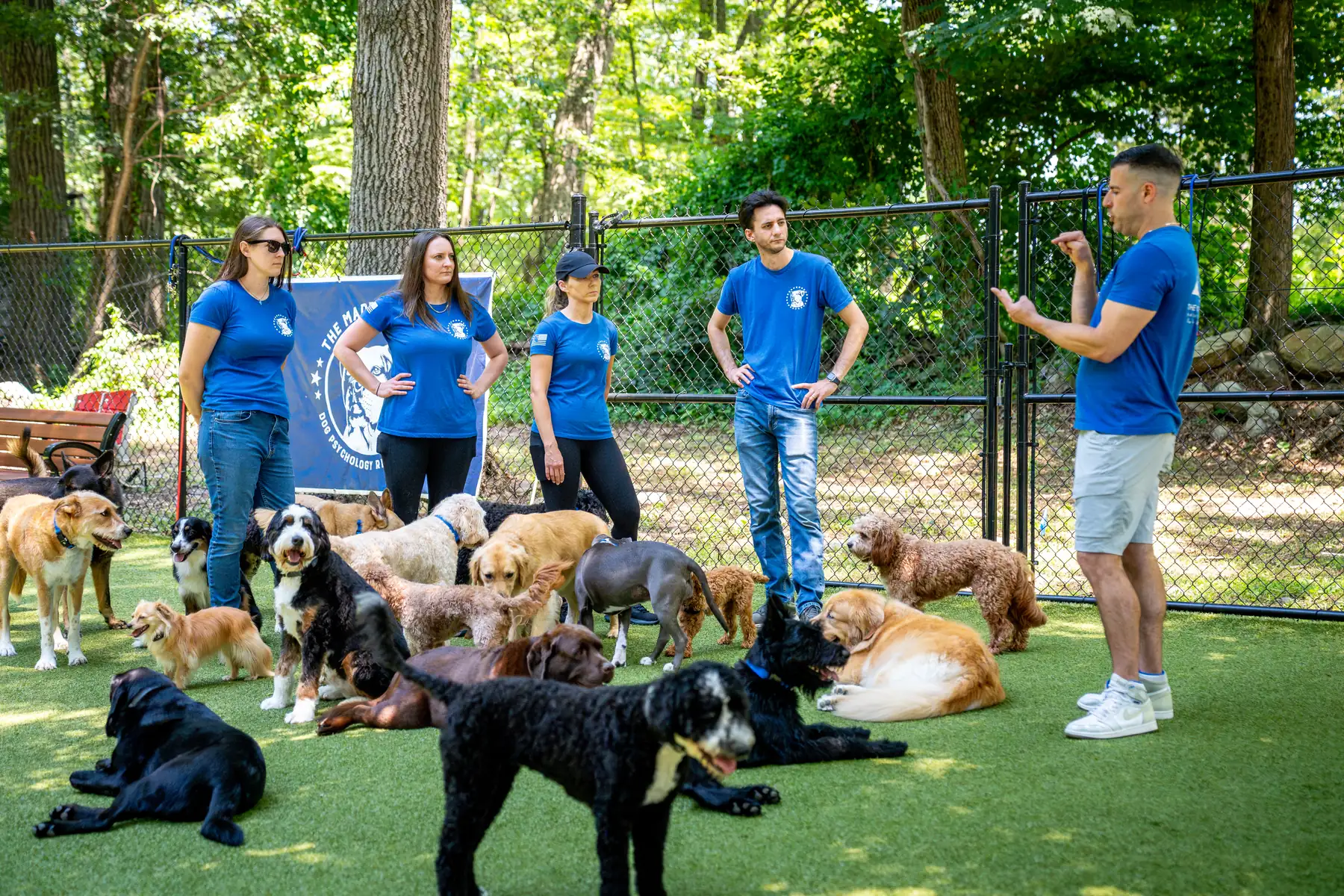
For more than fifteen years, Steve Del Savio has helped thousands of people in the New York City metropolitan area, from everyday families to celebrities. He is also an educator on social media, with more than two million followers across Instagram, Facebook, TikTok and YouTube. His approach is unique: he uses dog psychology to help owners understand their dogs and get to the root of the problem, for lasting results.
A pack you may recognize.
We are honored to have worked with so many remarkable dogs, and their owners too.
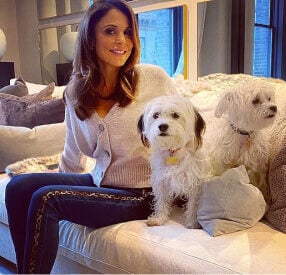
Bethenny Frankel
Debra Messing
Watch the film
DJ Camilo
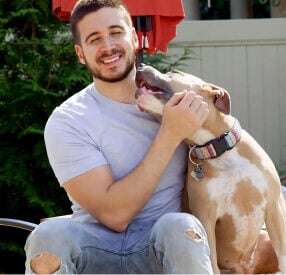
Vinny Guadagnino
Watch the film
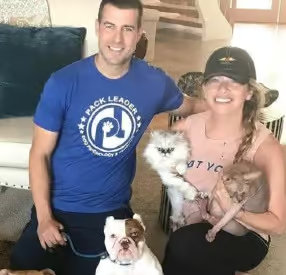
Dina Manzo
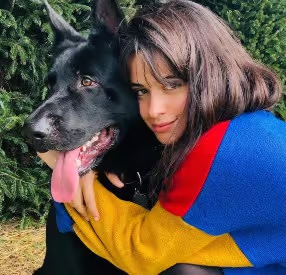
Camila Cabello
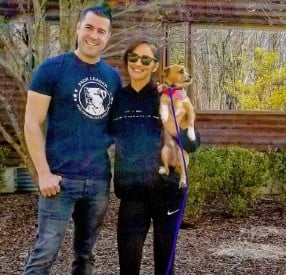
Minka Kelly
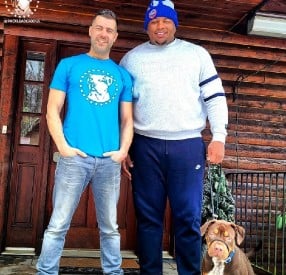
Dexter Lawrence
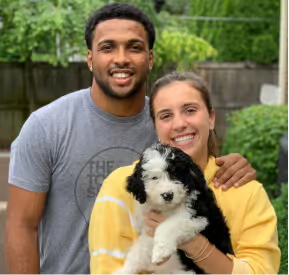
Julian Love
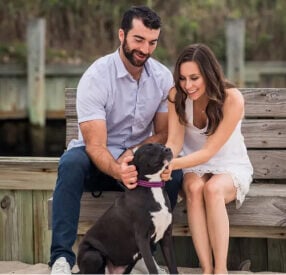
Kyle Palmieri
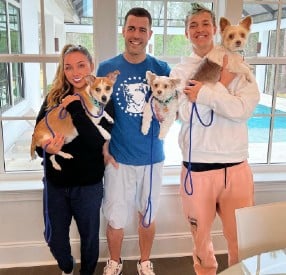
Ninja
Mariale
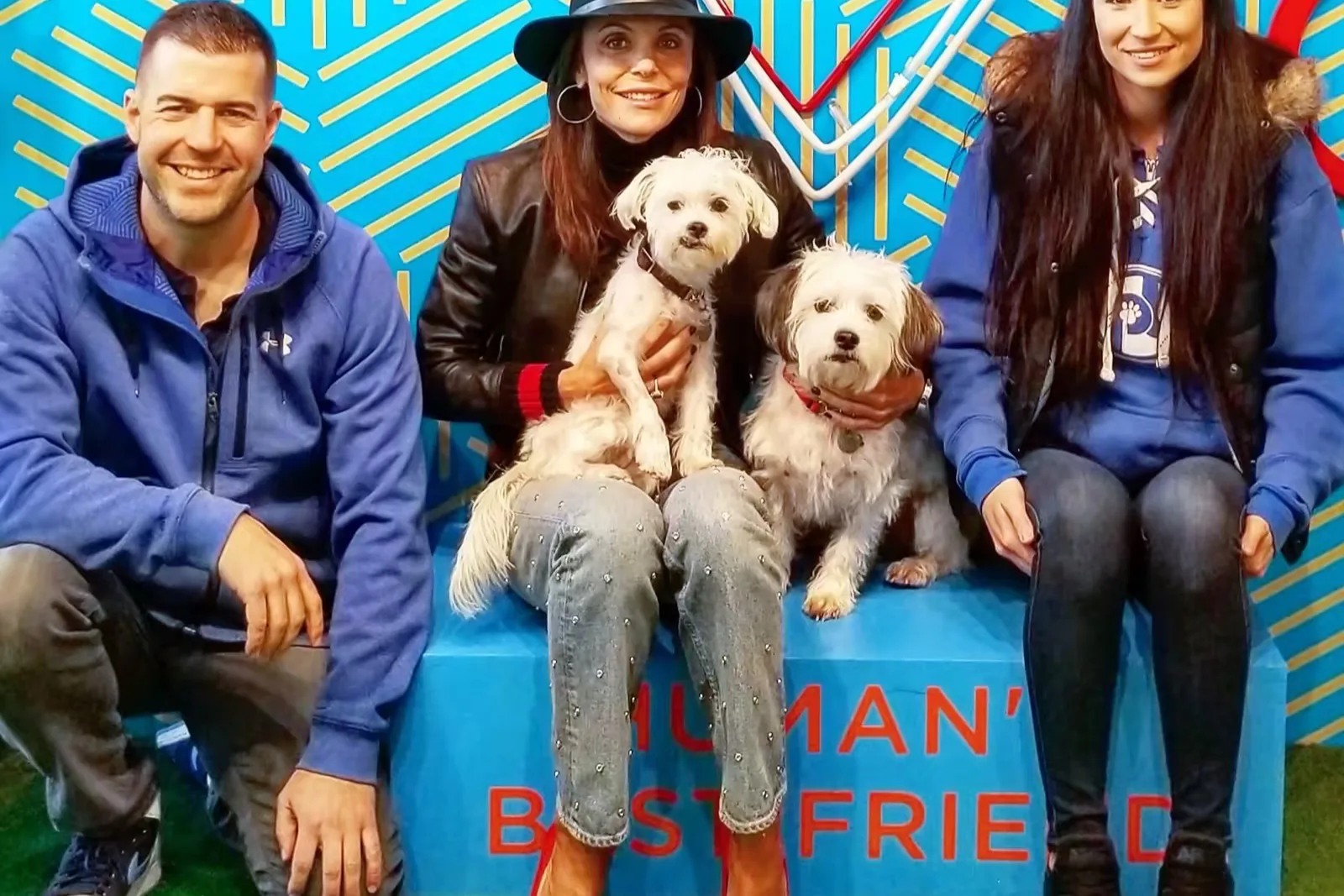
“Do not hesitate to reach out if you need help with your dogs… I seriously don’t know what I would’ve done without Steve’s intervention. I highly recommend Pack Leader services because this team is truly excellent.”
Bethenny Frankel, Biggy & SmallzReal Housewives of NY
Questions families ask
Is our dog actually aggressive?
Usually not, in the sense people mean. Steve's own test is simple: real aggression is the dog who bites and follows through, the dog who means it. Most of the dogs we meet with that label are insecure dogs making a lot of noise to keep away the things that worry them, or a frightened dog who was given no way out. Dog psychology reads the dog, not the label, and we tell you honestly which yours is on the first call.
Can an aggressive dog be rehabilitated?
The dogs we take, yes, and many of them arrive after other trainers and veterinary behaviorists have given up. We will not promise a percentage, because success rests on the family as much as the dog: it takes a lot of work, and the family has to be willing to change how they live with the dog. The dog needs rehabilitation and the humans need the training. What we can say is that we have yet to meet a dog who could not change for the better.
How do you train an aggressive dog?
We start with the dog's state of mind, not the behavior. An insecure dog who has stepped into the leader position needs that position taken back, calmly, so they have a leader to follow and no job to carry. We teach the dog exactly what to do and change how they feel, building confidence and earning their trust and respect. Most of our time is spent rewarding calm. The rest is clear, well-timed guidance, given without anger, so the dog learns that reacting with fight or flight is not necessary when they feel unsure, that they have a leader and parent figure to rely on and that calm is what brings good things. Then we teach you the same, every week, so it comes home.
What should we do right now, before we speak?
Stop testing the dog. No dog park, no meeting strangers' dogs on the sidewalk, no letting guests reach for them to see how they do. Keep the dog on a leash around the situations that set them off, inside the house as well as out, and keep everyone safe. Do not try to correct the growling yourselves without a professional: a dog who is scolded for warning learns to skip the warning. Then begin an application and tell us the whole history on the first call.
Our dog lunges at other dogs. Is board and train the right program?
It often is, and the call is where we find out. A dog who lunges, barks and snaps on the leash is nearly always a reactive, insecure dog, and what they need is a new state of mind practiced every day around other dogs, under calm leadership, which is what a stay at the ranch is: a real home, a structured pack and eight acres to walk. A dog who has attacked and injured other dogs is a different case, and one we do not take for in-person training at this time, though a Virtual Session with Steve can still help; tell us on the call and we will say which yours is.
Our dog growls at one of us. Is that fixable?
It depends on which dog you have. Most often the dog has taken the leader position over one person in the house and guards that person from the others; the dog who growls at the husband while leading the wife is one of the most common things we see, and that is work we do. A dog who goes after their own owners in any way is a different thing. Honestly, those are often among the most difficult dogs to rehabilitate, along with dogs in open conflict with another dog in the home, and we take very few of them at this time, and none in person with severe aggression or a major bite history; those families can still work with Steve through a Virtual Session instead. Tell us the whole history on the first call and we will say plainly which your dog is.
Do you help with food aggression and resource guarding?
Often, depending on how serious it is. Guarding the bowl, a bone, a toy, the bed or a person is one of the most common things families bring to us, and it is almost always a relationship problem. We work on the relationship and the way the dog feels in general before we work on the bowl; then we work on the guarding itself, if it is still there. It is taught at the ranch during the stay and handed to you in the weekly sessions.
Do you use e-collars or prong collars on aggressive dogs?
We use whichever tool fits the dog, the human and the relationship in front of us, and that decision comes last. We start with understanding: the dog, through dog psychology; the human; the relationship between the two; and the goal. Only then do we choose the tools that work best for that individual dog and family. Calm, confident corrections, delivered with the right timing, do not create fear and do not make a dog worse; they create clarity. The best tools of all are the right energy and knowing exactly what to do, and those come home with you.
Is it safe for our dog, and for the other dogs at the ranch?
Safety is the first job of the house. The Residency is kept to four to six dogs at a time, a full team of trained dog professionals is on site twenty-four hours a day, and every introduction to another dog is done on leash, under control, when the dog is ready for it and never before. A dog who has been lunging on the leash learns to walk calmly beside other dogs as part of a structured pack, which is part of the rehabilitation, and it is built one step at a time.
Our dog has bitten. Will you still take them?
It depends on the bite. A nip out of fear, a bite in a moment the dog had no way out, a snap at a hand reaching for the collar: those are usually dogs we can help. A major bite history, or a dog who bites and follows through, is a case we do not take for in-person training at this time, though we can still help through a Virtual Session with Steve. Tell us the whole history on the first call and we will say honestly which your dog is.
Is there a guarantee?
We do not guarantee results, and we would be wary of anyone who does. Training is teamwork between a dog and their family, and half of that team is you. What we do guarantee is support: the Lifetime Support Guarantee, which comes with The Pack Leader Residency and The Puppy Residency, means we are a call, text or email away for the life of your dog.
How long does board and train take?
The Pack Leader Residency runs four to eight weeks depending on the individual dog and goals. The Puppy Residency runs two to four weeks. We will propose how many weeks after we understand your individual situation and complete the in-person assessment.
What does it cost?
Begin with an application. We discuss the price range for a Residency on the first call, before any assessment fee or travel. Private Sessions are quoted on that call. Virtual Sessions are booked straight to Steve's calendar, and we are glad to talk it through first. A Residency is priced by the number of weeks. The in-person assessment determines fit and how many weeks your dog needs; if accepted, we agree the final quote before booking. The assessment is $295, credited toward any program you book within 30 days. A Residency covers the stay, the weekly owner sessions, the go-home session, the two-week follow-up and support for the life of your dog. Read the full breakdown
Begin an application.
Residencies are limited each season. The application takes five minutes, and you will hear from us within one business day.
An application opens a conversation. Nothing is booked until we have spoken.
Prefer to talk first? 201 528 3647. Whoever answers will know the ranch, the programs and the calendar.