
Separation anxiety
dog training.
The howling on the camera, the chewed door frame, the dog who cannot be left for an hour: those are the symptom. Separation anxiety usually comes from the relationship, from a dog who believes they are responsible for you and cannot cope when you walk out the door. That is why we start with dog psychology and how to be the leader and parent figure for your dog, then why separation anxiety often starts when we are home, how the anxiety develops, and what changes we can make to overcome it.
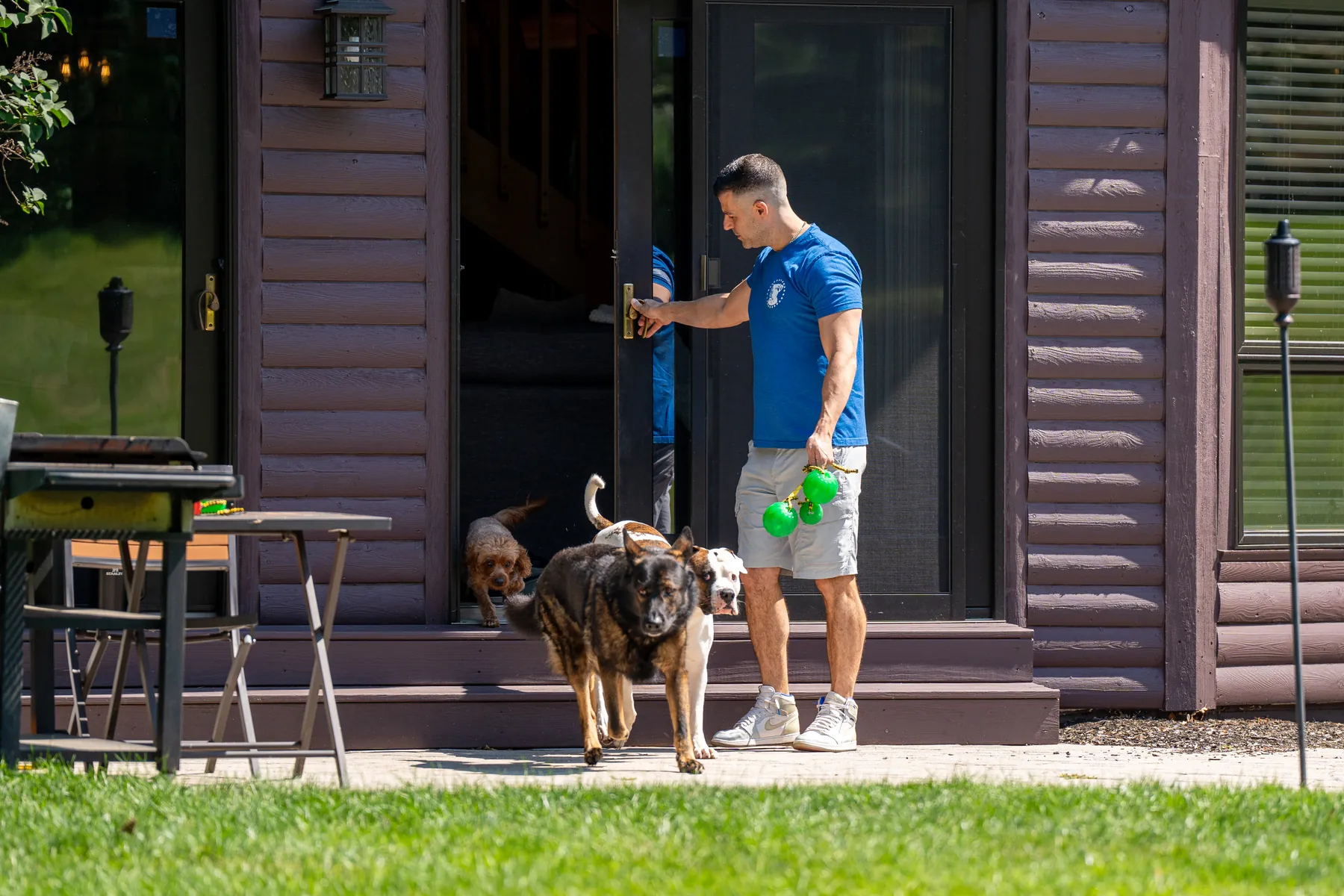
Most families who reach out to us about separation anxiety have already tried what the internet told them: leaving for a minute and coming back, the puzzle toys, the calming treats, sometimes the sedatives from the vet. They have a camera on the dog and they watch the panic from the office. Some have had a neighbor complain. Some have stopped going out.
Separation anxiety is a symptom. The question people ask is how to stop it, and it is not a bad question, it is just not the first one. The first question is what in the relationship is producing it. A dog with no calm leader to rely on takes the leader position out of need, and a dog who believes they are responsible for their human cannot bear to watch that human leave. Add the goodbye ritual, the affection given to an excited dog, the too-short walks, and the dog who was never taught that the pack can part and come back together, and the anxiety builds without anyone meaning to build it.
We work on the relationship, with the dog and with the family, at the ranch on eight quiet acres in Northern New Jersey, or by camera from your living room, where most of this work belongs.
What separation anxiety usually is.
In Steve's words, from a lesson in his community: “When your dog has separation anxiety, that's a symptom.” And from one of his posts: “Most of the time, dog owners and even many dog trainers try to focus on dog training techniques in the moment of the separation anxiety. In my humble opinion, what they forget to pay attention to is the overall relationship of that human and dog that is leading to separation anxiety.”
The dog who follows you everywhere
To the bathroom, to the door, from room to room. People tell us it means the dog loves them. Most of the time it is anxiety: a dog in the leader position keeping tabs on the one resource they cannot afford to lose. A dog who follows you psychologically can stay in another room and relax.
The goodbye ritual
The talking, the high voice, the dog allowed to follow you to the door in a state of excitement, and then the door closing on them mid-follow. The dog is left stuck in a state of following with a door in the way. A perfect recipe for separation anxiety, repeated every morning.
The dog who was never taught to be apart
To a dog's instincts the pack never separates. Being left is something we have to teach, and most families never do; the first time the dog is alone is the day everyone goes back to work. Detachment is taught at home first, with you in the house.
The pent-up dog
A walk around the block, breakfast, and then the crate for eight hours. An unfulfilled dog has the hardest time being left alone, because all that energy has nowhere to go but the door. Exercise comes before everything else in this work.
The crate that became a trap
A crate used as punishment, or a crate the dog was put in only to be left, teaches the dog that the box means abandonment. A crate that is a den, learned while you are home, teaches the dog to rest. Some rescues panic at confinement itself, and for them the work is done on a bed in an open room.
The rescue who came with it
Taken from the mother too early, trapped somewhere once, left in a shelter: some dogs arrive with the anxiety already built. They need rehabilitation and a leader, and what they usually get is pity, which to a dog is weakness. The anxiety is not their fault, and it is not yours; it is still yours to fix.
The person the dog cannot be without is the person who fixes it.
We can get a dog settled at the ranch in a few weeks. Separation anxiety is the one problem where that is not enough on its own, because the anxiety is about you. If the dog comes home to the same goodbye, the same homecoming and the same hours on the couch in your lap, the anxiety comes back with them.
So whichever program you choose, you are in it. In a Residency that means the weekly sessions, the go-home session and the two-week follow-up, with a blueprint for the house. In a Virtual Session or a Private Session it means daily practice between sessions: the exercise, the detachment, the departures and the returns, done the same way by everyone in the house, the dog walker included. Make the dog the priority for a month and most of these dogs change.
What we do about it.
Three ways in, and the first call is where we say which fits your dog. For separation anxiety, more than for any other problem we see, the camera is a real option, because the work is in your home.
Virtual Sessions
Forty-five minutes with Steve, one on one, by camera, with your dog beside you. We watch how the dog uses your space, how you leave and how you come back, where it actually happens, and you leave with a plan for your house.
Explore Board & train residencyThe Pack Leader Residency
Four to eight weeks living at the ranch, with a harder first few days for this problem and a great deal of exercise, then detachment practiced every day inside a calm pack. You train with us weekly, so the dog connects you to the new relationship.
Explore One on onePrivate Sessions
Ninety minutes at the ranch with Steve or Dave, on its own or as a series of three. The exercise, the place work and the departure, taught to your dog and to you, with the practice set for home.
ExploreHow we work through separation anxiety.
It begins with the application and a call, where we want the whole picture: what the dog does when you leave, how you leave, how you come back, how much exercise the dog gets, where the dog came from, and what the vet has said, because pain and medical causes are ruled out first. Then we say honestly which program fits.
Then the plan, which is different for every dog and every house. It usually touches four things: how much the dog is exercised and challenged, since a pent-up dog has the hardest time being left; how the dog uses your space while you are home, since a dog who cannot settle across the room from you is not ready to be left; how you leave; and how you come back, which is where most advice falls down. We change what the human does first, and the dog follows.
Leadership runs through all of it, all day: protection and direction, affection given to a calm dog and not to an anxious one, and a human who slows everything down, because anxiety loves speed. It takes longer than a leash problem. In Steve's words it is an endurance race, and the family's consistency is what wins it.
A dog can be left alone.
None of this says a dog can never be left. The opposite: a dog who cannot be left is carrying a job they were never meant to carry, and the goal is a dog who rests while you are out and greets you calmly when you are back. For most dogs that is reachable, rescues included.
Families ask, reasonably, whether the work is guaranteed. The honest answer is that success with a dog rests on commitment, consistency, follow-through and patience, and with this problem more than any other, so we will not promise a percentage. What we can say is that we have yet to meet a dog who could not change for the better, and that many of the dogs who come to us arrived after being told they should be medicated, managed around, or given up on.
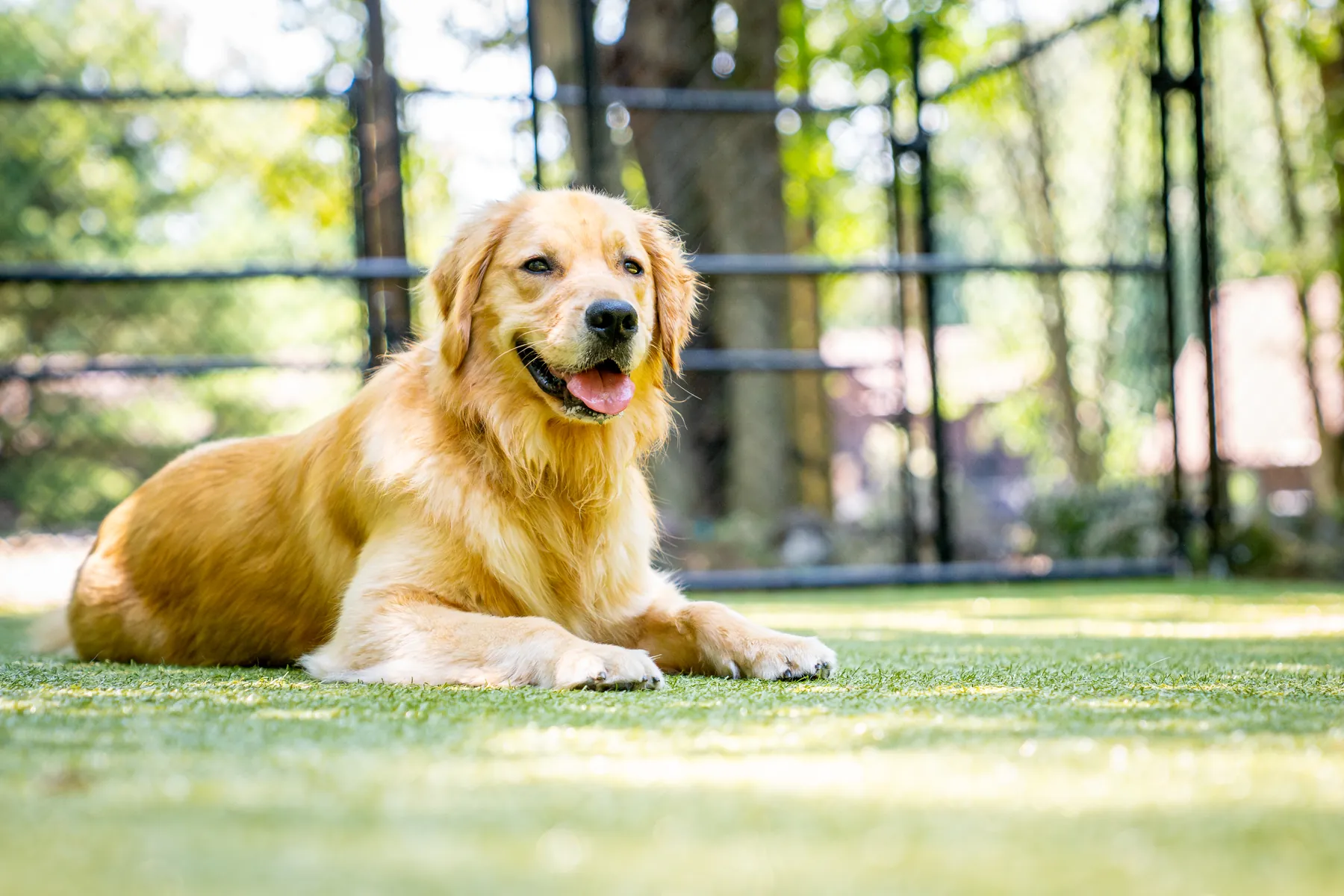
“We were constantly stressed about our golden doodle Breck who had severe separation anxiety, over excitement, crate issues, and leash pulling… After a 3 week board and train program with Steve and a blueprint for us to follow at home… We no longer have to worry about leaving him alone at home.”
“It takes time, dedication, and consistency to see progress but it’s so worth it.”
Laura & BreckSevere separation anxiety; a stay at the ranch and a blueprint for home
The last stop, for many.
What we teach is not just a theory. It was developed from experience: first walking large packs of dogs through Hoboken every day for years, then helping thousands of dog owners achieve balance with their dogs for more than fifteen years, including hundreds of families by camera.
The method puts psychology ahead of obedience: a dog that sits on command and howls the moment you leave has not been trained, they have been drilled. We work on the state of mind that holds up when nobody is home, and on the relationship that keeps it.
The real thing.
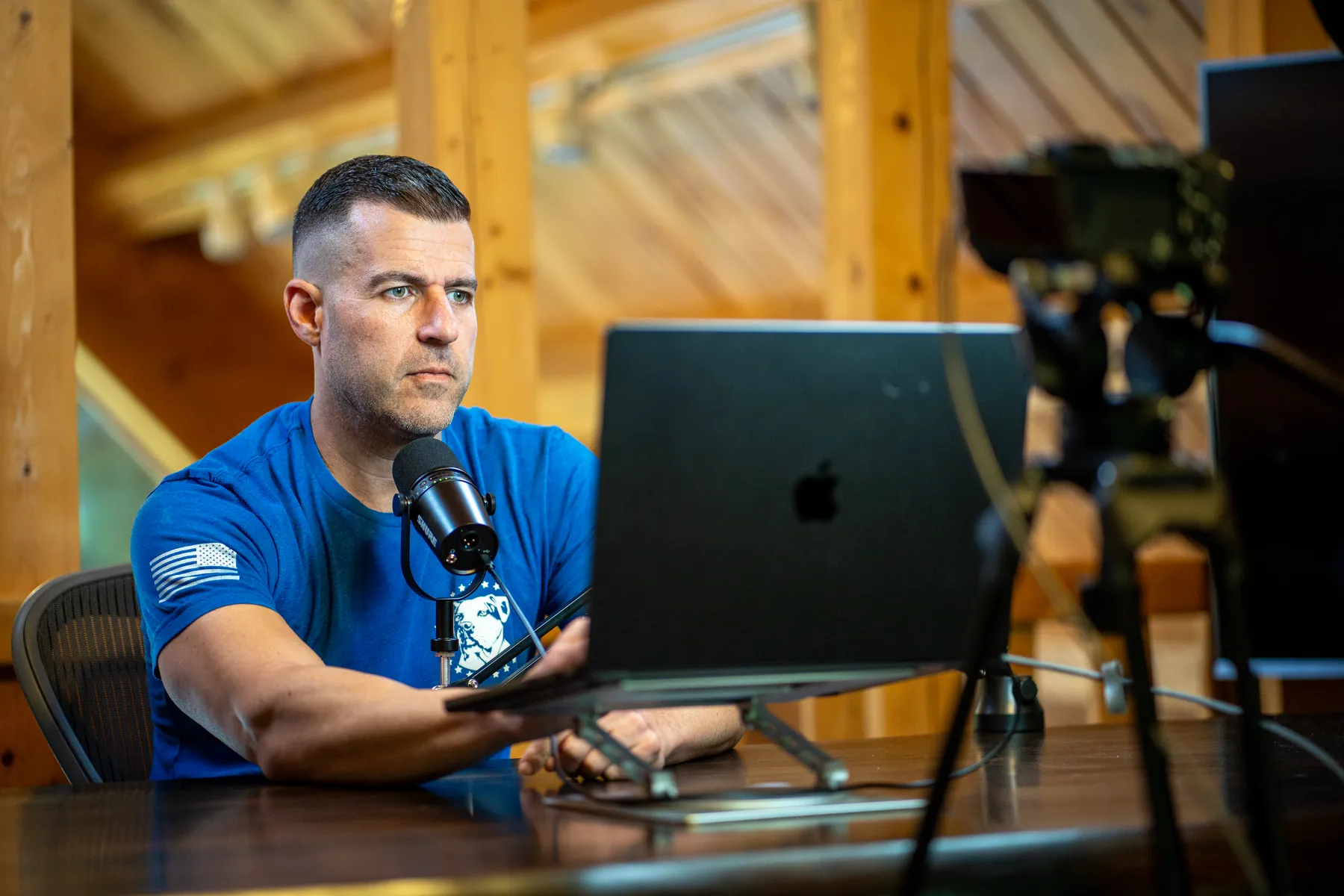
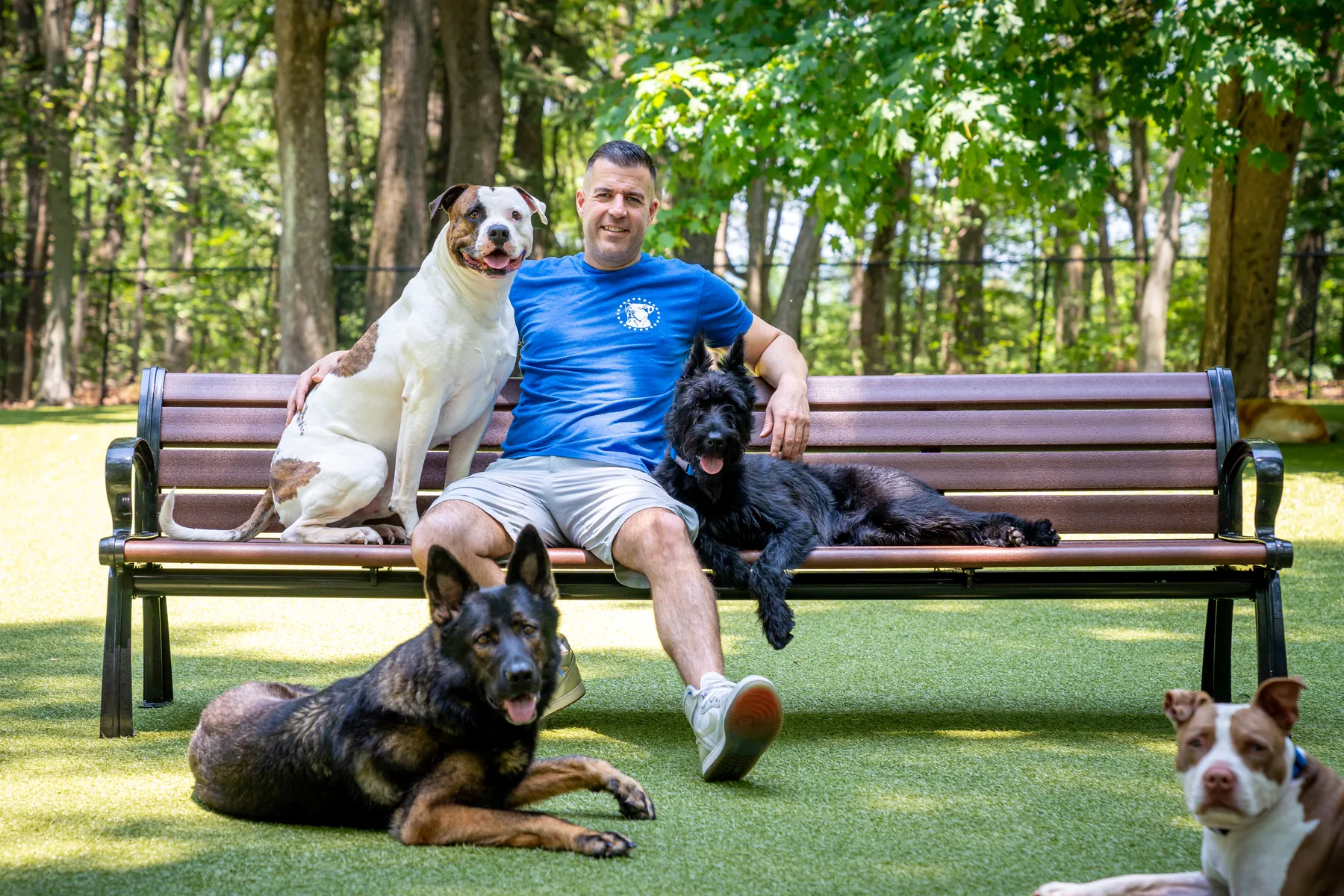
For more than fifteen years, Steve Del Savio has helped thousands of people in the New York City metropolitan area, from everyday families to celebrities. He is also an educator on social media, with more than two million followers across Instagram, Facebook, TikTok and YouTube. His approach is unique: he uses dog psychology to help owners understand their dogs and get to the root of the problem, for lasting results.
A pack you may recognize.
We are honored to have worked with so many remarkable dogs, and their owners too.
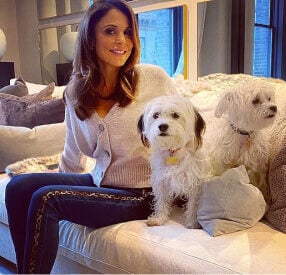
Bethenny Frankel
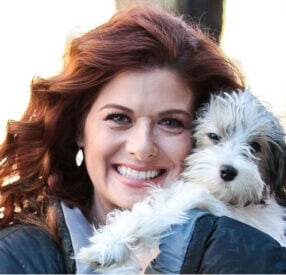
Debra Messing
Watch the film
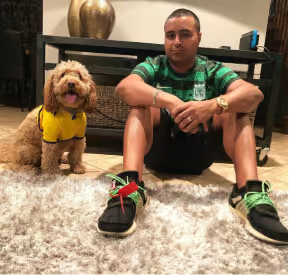
DJ Camilo
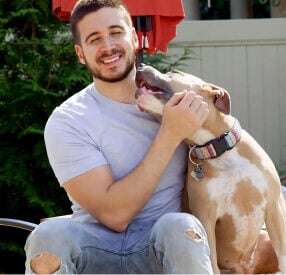
Vinny Guadagnino
Watch the film
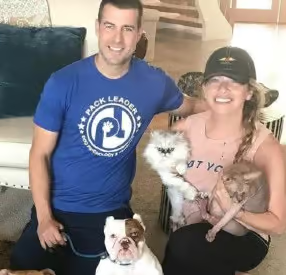
Dina Manzo

Camila Cabello
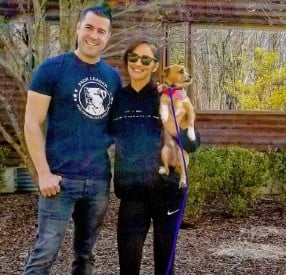
Minka Kelly
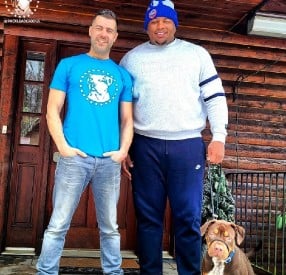
Dexter Lawrence
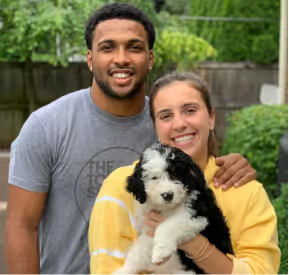
Julian Love
Kyle Palmieri
Ninja
Mariale
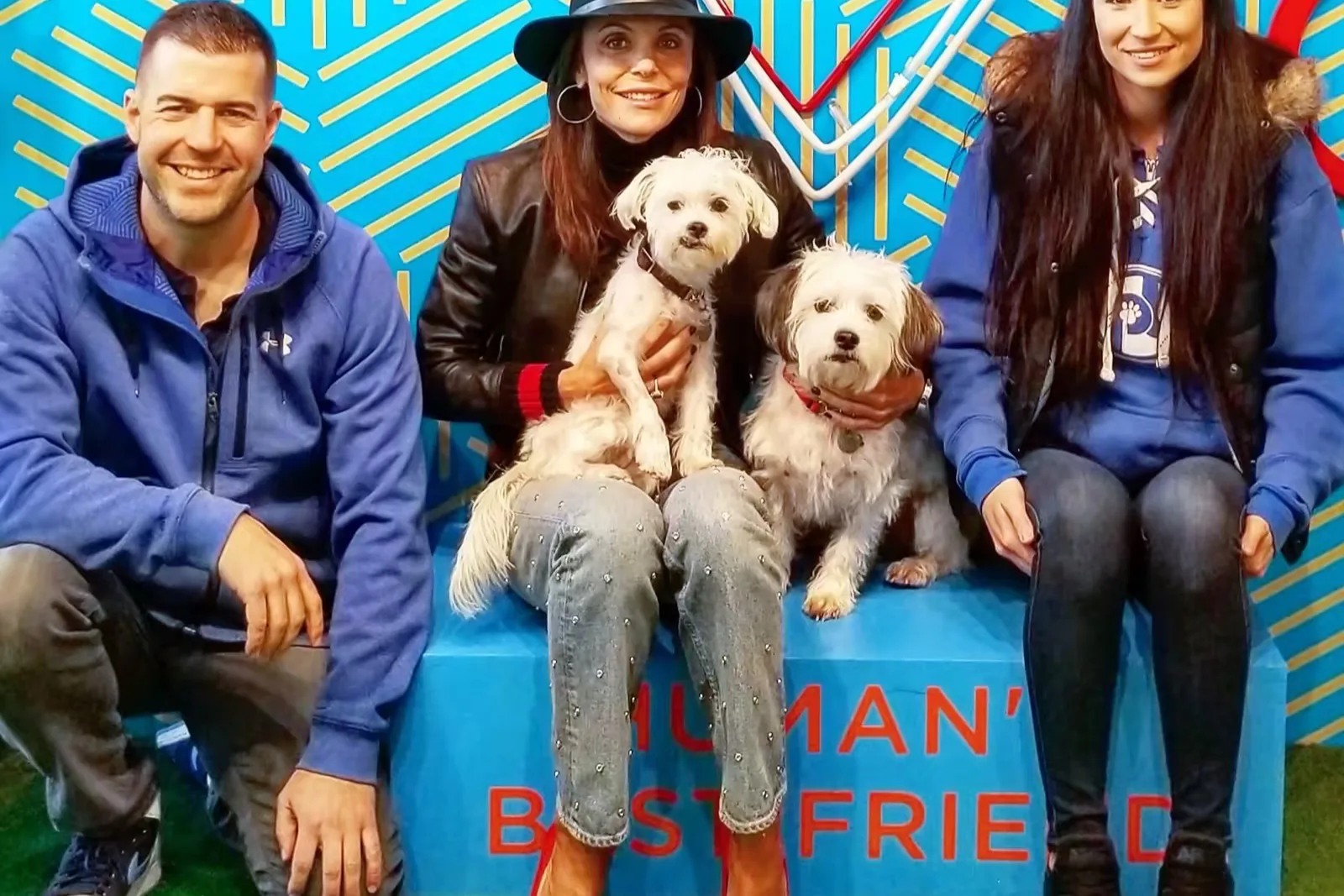
“Do not hesitate to reach out if you need help with your dogs… I seriously don’t know what I would’ve done without Steve’s intervention. I highly recommend Pack Leader services because this team is truly excellent.”
Bethenny Frankel, Biggy & SmallzReal Housewives of NY
Questions families ask
How do you stop separation anxiety in dogs?
By working on the relationship the anxiety comes from, with a plan built for your dog and your house. Dog psychology tells us what is driving it: how much the dog is exercised and challenged, how the dog uses your space while you are home, how you leave, and how you come back. We change what the human does first, give the dog a leader to rely on so there is no reason to keep tabs on you, and the dog follows.
What causes separation anxiety in dogs?
Most of the time it was built at home without anyone meaning to. A dog who has no calm leader to rely on takes that position out of need, and a dog who believes they are responsible for their human cannot cope when that human walks out the door. The goodbye ritual adds to it: the talking, the high voice, the dog allowed to follow to the door in a state of excitement, and then the door closing on them mid-follow. So does affection given to an excited or anxious dog, which teaches the dog that the state is right. So does too little exercise. Some dogs, rescues especially, arrive with it already built; they need rehabilitation rather than blame, and so do the dogs who learned it at home.
How can I tell if my dog has separation anxiety?
The common signs are whining, barking or howling once you are gone, scratching or chewing at the door, the crate or the window frame, pacing, drooling, accidents in a house-trained dog, and a dog who will not eat until you are back. The sign most people miss comes before you leave: a dog who follows you from room to room, to the bathroom, to the door, who cannot settle across the room from you while you are home. See the vet first to rule out pain or a medical cause, then look at the relationship.
My dog follows me everywhere. Is that separation anxiety?
It is usually the start of it. A dog who is glued to your side, who follows you to the bathroom and whines when you walk away, is not a calm follower; they are a dog in the leader position keeping tabs on the resource they cannot afford to lose, which is you. We teach a dog to follow you psychologically rather than physically: to stay where they are told, to relax in another room, and to trust that you have things under control. That is the ground the rest is built on.
Does board and train work for separation anxiety?
Yes, with two honest conditions. The first days are harder for a dog with separation anxiety than for most, because the dog is anxious about being left and now the humans are gone and the place is new; we spend those days on the relationship, on leash and with a great deal of exercise, before any separation work. And you must be involved. A dog sent away for a month and handed back is no good for this problem, because the dog never connects you to the new relationship. The Residency includes weekly sessions for you, the go-home session and the two-week follow-up, and the dog's new habits are handed to you one by one. Many families find the two weeks of distance helps on its own: the dog learns that the pack can part and come back together.
Can separation anxiety be fixed in a virtual session?
Often, yes, and Steve has done hundreds of these by camera. Separation anxiety lives in the ordinary moments of your home: how the dog is allowed to use your space, how you leave, how you come back. On camera we watch those moments where they actually happen and change what the human does first. You leave the session with a plan built for your dog and your house, and the daily practice is where it takes hold. For a dog in the red zone, who injures themselves or destroys the house when left, we will say honestly whether the Residency is the better start.
Should I crate my dog if they have separation anxiety?
A crate helps when it is a den and hurts when it is a trap. We never use a crate as punishment, and we do not start by putting the dog in the crate and leaving; we start by teaching the dog to rest in the crate, or on a bed, while you are home, so that staying in one place and relaxing is what they know how to do when you go. Covered on three sides, it mimics a den, and most dogs come to love it. Some dogs, rescues especially, panic at confinement itself; for them the crate comes later or not at all, and the work is done on a bed in an open room. Your house, to a dog, is one big crate; the lesson is the same either way.
What about medication for separation anxiety?
We are not against medication, and a dog with a neurological or medical condition may need it. In our experience it is often used to mask the problem rather than fix it: a sedated dog is quieter and just as anxious, and the anxiety is back when the dose wears off. Many of the dogs we have worked with improved while coming off anxiety medication, with their vet, once the exercise, the structure and the leadership were in place. Talk to your vet, and tell us on the first call what your dog takes.
How long does it take to fix separation anxiety?
Longer than a leash problem, and in Steve's words it is an endurance race, not a sprint. Anxiety takes time to overcome in dogs, as it does in people, and it comes off in layers. What shortens it is the family's commitment: the exercise every day, the detachment practiced every day, the departures and returns done the same way every time, by everyone in the house and by the dog walker too.
Should we just never leave the dog alone?
No. A dog can be left alone, and a dog who cannot be is a dog carrying a weight they were never meant to carry. To a dog's instincts the pack never separates, so being apart is something we teach, in small steps, at home first. The goal is a dog who rests while you are out and greets you calmly when you are back, and that is a reachable goal for most dogs.
Is there a guarantee?
We do not guarantee results, and we would be wary of anyone who does. Training is teamwork between a dog and their family, and half of that team is you. What we do guarantee is support: the Lifetime Support Guarantee, which comes with The Pack Leader Residency and The Puppy Residency, means we are a call, text or email away for the life of your dog.
What does it cost?
Begin with an application. We discuss the price range for a Residency on the first call, before any assessment fee or travel. Private Sessions are quoted on that call. Virtual Sessions are booked straight to Steve's calendar, and we are glad to talk it through first. A Residency is priced by the number of weeks. The in-person assessment determines fit and how many weeks your dog needs; if accepted, we agree the final quote before booking. The assessment is $295, credited toward any program you book within 30 days. A Residency covers the stay, the weekly owner sessions, the go-home session, the two-week follow-up and support for the life of your dog. Read the full breakdown
Begin an application.
Residencies are limited each season, and Virtual Sessions book straight to Steve's calendar. The application takes five minutes, and you will hear from us within one business day.
An application opens a conversation. Apart from a Virtual Session, nothing is booked until we have spoken.
Prefer to talk first? 201 528 3647. Whoever answers will know the ranch, the programs and the calendar.