
Of all the questions I am asked as a behaviorist, one arrives more often than any other: how do I get my dog to walk calmly on a leash? In my Hoboken years I was out every day with a pack of up to ten dogs, all of them walking calmly on leash through every distraction that city could offer. People stopped to watch. I heard the same astonishment again and again: I don't know how you do it. I wish I could claim magical powers. The truth is simpler. The dogs saw me as their pack leader.
The walk starts the moment you pick up the leash.
Here are seven habits that will help you establish the same standing with your own dog, and master the walk.
1. The walk begins indoors
It is a common belief that the walk begins once you are outside. In reality it begins the moment you pick up the leash. So notice: what state of mind is your dog in when the leash comes out? It is common to see a leash clipped onto a dog spinning with excitement. Do that daily and the leash itself comes to stand for excitement, and so does the walk. Take your time. Wait for your dog to settle into a calm, submissive state of mind, and only then put the leash on.
2. Lead through the door
Here is another scene I see everywhere: the door opens and the dog bolts through it, human trailing behind. What is the harm? From the dog's perspective, they have just appointed themselves leader of the walk, and you the follower. Instead, have your dog sit calmly while you open the door. Stand there, door open, and wait once more for that calm, settled state. No verbal command is needed. Wait for their eyes to find yours, then walk out first, calmly and confidently, with your dog following you. In that small ritual, your dog practices a calm state of mind from the follower's position rather than the leader's.
3. Always walk in front
In the dog's world there are two positions: leader and follower. A dog walking out in front sees themselves as the pack leader. It is as simple as that. It is why they pull, bark, lunge, mark constantly, sniff everything and generally do as they please: they believe they are in control. Keep your dog at your side or behind you, and you become the leader, in charge of every situation the outdoor world may present.
4. Sniffing is a reward you give
You decide where and when your dog may sniff around and relieve themselves. When they are walking calmly at your side or behind you, that is the perfect moment to offer this reward. Just as important, you decide when the reward time ends. You can offer it at several points along the route. Simply keep the reward time shorter than the time spent walking with focus, in a calm state of mind.
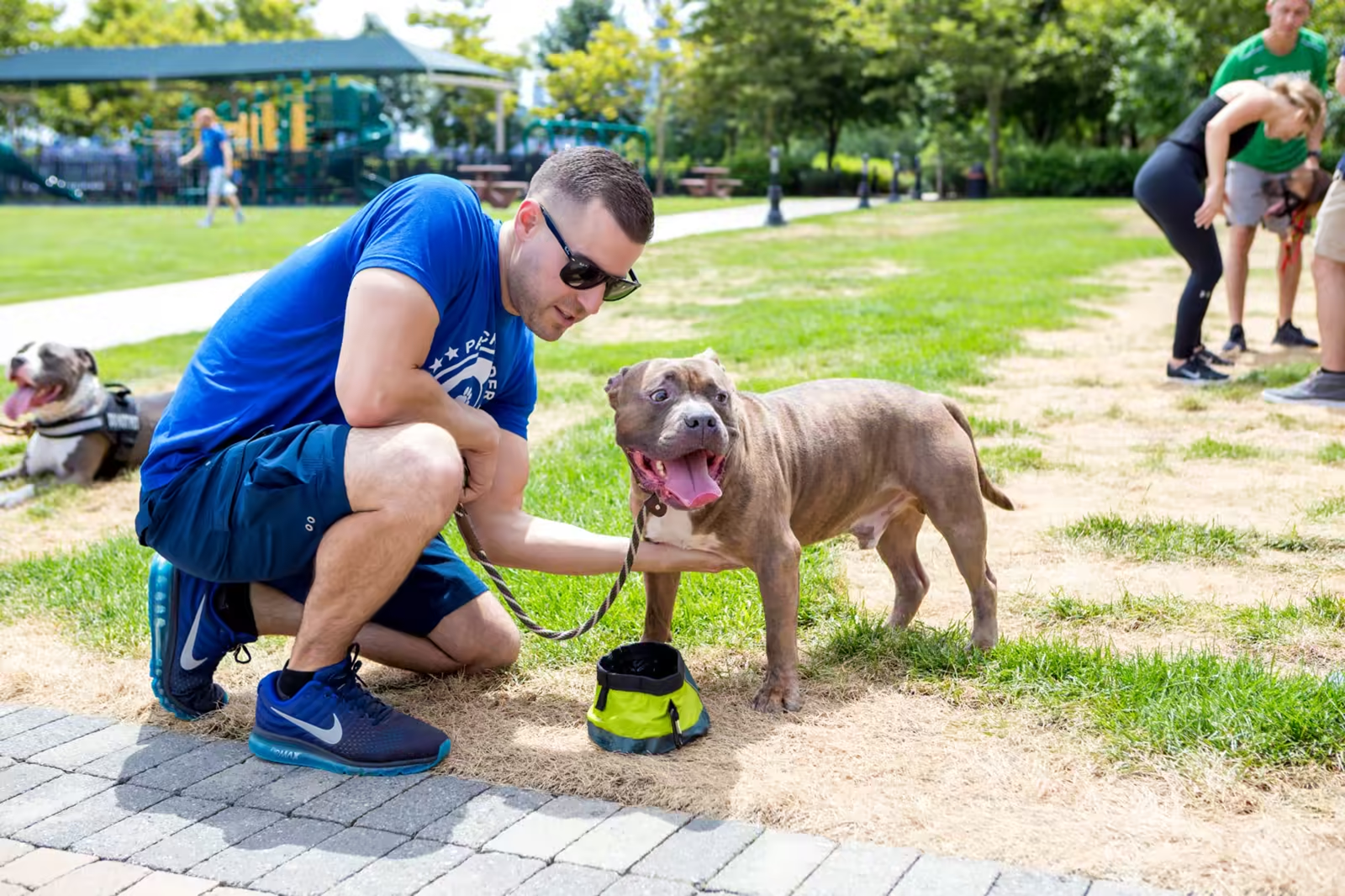
5. Mind your own energy
Are you in a calm, confident state of mind? If not, your dog knows it. However well you perform calm on the outside, they read what you feel on the inside. Tension, nervousness, fear, anxiety, frustration, anger: a dog will not follow any of these unstable emotions. So be aware of your energy, and be honest with yourself. Recognize what you feel in every situation. That honesty is how you learn to work through those emotions, and how you grow as a pack leader.
6. Give the walk its hour
Life in and around the city keeps everyone on the go, and in a dog's eyes none of it matters: not the meeting, the appointment or the evening out. Always make time for the walk. I recommend thirty minutes to an hour for the morning walk, even when it means rising a little earlier. The return on a proper walk shows up across the entire relationship you share with your dog. And keep watching their overall behavior; it will tell you whether their physical and mental needs are truly being met.
7. End as you began
When you return home, enter exactly the way you left. Wait for your dog to reach a calm, settled state of mind, then step inside first with your dog following. Have them sit, and remove the leash only once they are relaxed. This is also a fine moment to offer food and water. Fed after the walk, a dog has the experience of having worked for their meal rather than receiving it for nothing.
One last thing, from one leader to another: set a good example on the street and always pick up after your dog. Stay calm and confident, pack leaders.
Next in the journal: calm, confident energy, the state of mind that carries every walk.
Discover moreThe ideas here are behind every program at the ranch. Explore the method